What did that mean?
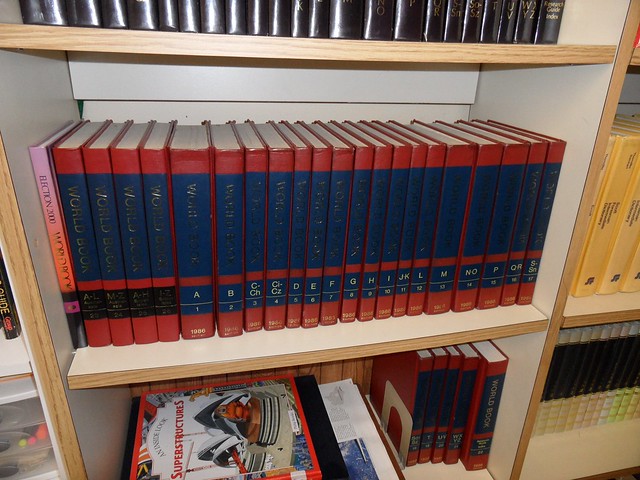
When I was 10, it meant I would pull out the World Book Encyclopedia --whatever letter-volume I needed to address my topic, I would find the appropriate entry, and read it through once to make sure the article had everything on the outline--we used outlines to write everything when I was 10.
If I was writing about an animal, that meant I probably needed to find out where it lived, what it ate, and how it raised its young. I might also have to include what it looked like, including distinguishing features.
If I was writing about a country, that meant my outline probably included the location, population, cultural indicators--along with representative pictures-of music, food, and clothing. I might also be required to find out about schooling and what children my age did for fun.
You get the idea.
Paragraph by paragraph, I would painstakingly transpose, substitute, omit, and add words, so that I was "reporting in my own words".
We were not allowed to "copy". (I don't think I ever heard the word paraphrase until much later in my school career -- it sure would have been useful at 10.)
I usually got an A on my resulting report.
Fast forward.
For many years during my early teaching, my own students created reports using much the same process as mine at 10.
We had a meager library in our school. I don't remember it having many nonfiction books available. If they were there, we did not check them out.
We had an old set of World Books in my first classroom--about ten years out-of-date.
I also had amassed a classroom library of information books by requesting related sets from the main district library-- again, many out-of-date books.
Once my students had located their one needed book, one book on their topic).... they repeated my above process.
Flash Forward.
In later years, I began to question the notion of research and observe my own processes, especially as I got personally interested in my own topics, and engaged in authentic quests for information, gained new understandings and increased my personal learning for real purposes.
What did I do?
Usually passion drove my search. I wanted to know. I wanted to learn.
My search led me to books, articles, poems, websites, people, places where information could be obtained...back again to books, articles, old notes, new notes, websites, blogs, people, places...
The search was always recursive and generative... leading me back to previous sources for different reasons and to additional sources discovered along the way while searching.
What did I do?
I took notes furiously... on yellow legal tablets-- then. On my iPad or computer now.
I tore out pages of magazines or journals to save, I tabbed book pages, I bookmarked webpages for later,
I copied and pasted.
I noted sources, recorded references--- lots of them.
What did I do?
I reviewed and organized what I found. Did I find what I was looking for? Do I still have questions?
What do I still need?
I realized that what I did, I needed to teach my students-- allow my students, encourage my students--to do the same as they wrestled with self-selected topics of interest and real issues.

 In The Pet Project: Cute and Cuddly Vicious Verses
 by Lisa Wheeler, a young girl engages in scientific research to decide what kind of pet she would like to get. The resulting verses provide humorous research guide of sorts that makes a wonderful introduction to the notions of authentic research for young students.
It drives home the role of real questions, authentic needs to know, and demonstrations of the processes and work involved.
At NCTE 2012 I heard Chris Lehman speak about notetaking and researching for students.
He reminded us that we all do research all the time for authentic reasons and gave several examples, such as when the doctor says you need a procedure that you don’t want , so you research alternatives, or deciding what book to read next, or figuring out how to fix your car, or deciding whom to vote for in the upcoming election.
What do we actually do as adults in real situations when we are investigating an issue, researching a topic, figuring out what we need to know and deciding how to find out?
This is what we need to teach.
I came to this conclusion ...and so did Chris Lehman. In Energize Research Reading and Writing, he talks about helping students narrow down topics and evaluate sources:
Teaching students to research... does not begin by assigning finite topics and handing out
preselected sources. Instead, it begins by embracing the uncertainty all of us feel when first researching a topic, then, teaching budding researchers to do the things we have learned to do...
... The skills of research begin from the very first : "I must learn about..." We need to teach from that starting point ...Step by authentic step, this useful resource enlivens research for you and your students and provides a framework for doing real work-- real research--after the " I need to learn about.."
As you encourage research and reports with your writers, my previous post on inquiry and questioning, Wonderings, What-Ifs and Other Questions, may be a helpful starting place.
Today's Deeper Writing Possibility
What do you want to know or learn or understand?
What questions do you have?
Make a list of things you are wondering or want to investigate.
Choose one question or issue or topic to research.
Where will your search begin?
What resources will be helpful?
Once you have enough...begin to review and organize your information.
You may even want to write a report or essay summarizing responding to what you found.
Enjoy the process, Savor the journey.
What questions do you have?
Make a list of things you are wondering or want to investigate.
Choose one question or issue or topic to research.
Where will your search begin?
What resources will be helpful?
Once you have enough...begin to review and organize your information.
You may even want to write a report or essay summarizing responding to what you found.
Enjoy the process, Savor the journey.

 .
. 


 followed by


