Showing posts with label Research. Show all posts

Thursday, March 5, 2015

LIVING BETWEEN THE WRITTEN LINES:THE WRITING LIFE


What is going on when a writer is not writing?

You know what I am talking about.  Now that I have mentioned it, you realize that your favorite blog has not shown up in your mailbox for several weeks.   Or perhaps it is months.

Or you have been waiting and waiting for a new novel from your favorite writer.  You are missing her characters and their escapades that mirror yours. Or maybe it is the exotic locales to which you travel through her pages that you miss.

Perhaps the poet whose words you cannot live without has not published a new collection for quite a while. There has been no way for you to examine your interior landscapes or map outer-region observations without the words from this prophet who poetically turns everything inside out, bringing clarity to your world and naming your realities.

What is going on when a writer is not writing?


I have not been writing.
I am guilty.
At least I have not been writing the intended writing ... or  the "should-be" writing.

I am guilty of being absent from this blog for about a month now.  And the spaces between posts over time since I began the blog has stretched to a length that tortures me, haunts me..... chases me in the night, holding up idea after idea which I have not been able to pursue.

How long is the window on writing ideas?  Do they have a shelf life and have I missed out on some of these fleeting ideas forever?   See my earlier post, Expiration Dates, exploring these questions.

In the meantime,  I have been "out" living an extremely busy life.
You know what I mean... you are busy too... appointments, meetings, events, projects....
I am too tired to write when I finally get home... or so I tell myself.

I am a morning person, so if it doesn't begin in the morning, it is probably not going to happen.

In the meantime,  I have been working on my book outline for our  2015 Advanced Summer Institute in the Columbus Area Writing Project.  And I have been writing responses to thoughtful reflections, questions, and suggestions from those who will be writing chapters for this book I  will be editing.

I have also been procrastinating,  a process which I have turned into a high art. See my earlier post, Procrastination and Writing, which details all the ways I manage to write and not write at the same time.

One of the most productive activities, in which I have engaged during this time is reading--- reading about "the writer's life."

 The Art of Slow Writing: Reflections on Time, Craft, and Creativity by Louise DeSalvo was just what I needed during this period, as I reassessed my life as a writer.   It was suggested by a member of my writing group.  I already had it on my iPad, but moved it up to next on my To Be Read List.

In this meditation on the writing life, DeSalvo gives us glimpses and gulps of  real writers' lives and processes-- famous writers, some we may not know, classic writers, as well as contemporary.

  (This book)... is based not upon how I believe writers should work, and not upon how I work, but upon decades of research into the writing process and the work habits of real writers. If we understand the writing process, learn how real writers work, and use that information to develop our unique identity as writers, we'll transform our writing lives.

As we read how these writers write, research, persevere, and sometimes fail, we find these reflections to be invitations, as the author suggests in the introduction:

...invitations for us to think about specific techniques we can use to enter the slow writing life; find ways ways to deal with the emotional pitfalls-- fears, anxiety, judgement, self-doubt--that inevitability accompany our work; delve into what it means to live a healthy and productive creative life; and celebrate our tenacity and our accomplishments.

I am still considering DeSalvo's idea of slow writing:
I'd begun collecting anecdotes about how slowly many famous writers and artists worked.
..."slow writing" doesn't just take time, but makes time."  Slow writing is a meditative act: slowing down to understand our relationship to our writing, slowing down to determine our authentic subjects, slowing down to write complex works, slowing down to study our literary antecedents.
Slowing down...

Even as I am still digesting the helpful, encouraging, and challenging words in this text, I wanted more of the same.   So I turned to another book in my To Be Read Pile.

Curiosity's Cats: Writers on Research edited by Bruce Joshua Miller proved to be the perfect  companion book.

Like DeSalvo, Miller also gives us peeks into the processes and postures of writers-- this time as they engage in and reflect on research for a variety of types of writing and final products.  He introduces his work:

  ...(this) is a book about context, primary sources, and the indispensable value of libraries and archives as repositories of original books, documents, manuscripts, newspapers, periodicals, photographs and tracts.
 He goes on to emphasize the importance of research in the life of a writer:

"I've heard, to often, the old admonition: write what you know," says novelist Margot Livesey in her essay,  He Liked Custard. "I was slow to understand that research could allow me to know more..."

Indeed as writers, we cannot write well without engaging in research.  I find this to be true, even to produce the shortest poem... or this blog.  And what a variety of ways we can find information, follow the trail of one fact, or trace the history or impact of one idea.


The essays in  Curious Cats take us inside this process from the varied perspectives of  thirteen very different writers.

As I return to my blog today, still pondering all that I have read and am still learning about the writing life, I am thankful always that I am a writer.   See my earlier post, Thankful I Am a Writer for all the reasons why and also  for several additional resources about about the writing life.


Today's Deeper Writing Possibilities


Reflect on your own writing processes, postures and habits.  

When do you write?  When is it difficult for you to write?
What helps you? What factors hinder you in the writing process?

When  and how do you engage in research?

Write an essay describing your  own processes and the value of knowing what other writers do. Include advice you deem essential for a beginning or struggling writer. 

Tuesday, May 13, 2014

WRITING WITH SOURCES

Knowledge never stands alone.  It builds upon and plays against the knowledge of previous knowers and reporters, whom scholars call sources. 

Thus begins Writing with Sources: A Guide for Students by Gordon Harvey of  Harvard University. ( This booklet is also available in PDF format.)

This slim  handbook for Harvard students became my initial source, my introduction and entrance to an 18- month journey, accompanied by other Columbus Area Writing Project teacher consultants,  into the world of teacher inquiry and research.

I very soon after also discovered what seemed to be the most popular and comprehensive text on the matter, Writing from Sources by Brenda Spatt, now in its eighth edition.

Our teacher inquiry group originally set out to discover, study and define writing with or from sources, examine related writings-- both theory and research, practice and apply new learning in our own writing, as well as explore  both teacher and student inquiry-- how it looks and how it best happens-- in our classrooms, and then, finally, present our work and findings to a larger group or in a larger setting.

(This larger setting in  which we presented ended up being a session at NCTE 2012, but that jumps ahead of the place in the story where we now stand.)

***

 What is writing with sources?

This was the focus of our first exploratory writing  in the second of our twice-monthly sessions.

(We wrote in every session- at the beginning and at the end. We wrote before we came to each session. And we wrote after each session. Writing was the foundation of our thinking, and sharing,  our processing and learning.)

What is writing with sources?
My own response at that time ( see below)  included lots of wonderings and questions:

As I currently understand writing with sources, it means writing that involves using multiple texts, media, people and artifacts as sources of information and ideas to help frame my own  thinking and writing.
 
These sources help me know facts, information, and knowledge bases that are available, what others have thought and said and discovered about my topic in the past, and what they are currently thinking, saying and doing related to my topic.   Information sources will also help me learn what has changed and what is disputed involving my area of interest, as well as what is not known—gaps in understandings or available knowledge in both the community of practice and myself, as well.
I see using sources as a process of thinking about what I already know, and making connections to what others know and have learned before me.  How do I fit in with what I am finding? Where do I stand on past and current ideas?  I see this as a process of understanding what I think about what they think.
Discovering which sources will address my personal wonderings, my burning desires for knowledge or reasons, principles or theory is crucial to research.  Who has wondered this before me?  Who else agreed?  Who moved the ideas in a new direction, for a new purpose, a new population?  And most importantly, where and how can I enter the conversation?
Being able to not just articulate the literal information I find in and through various sources, but to interact with it,  implement and apply it, transform it, and make it my own, while realizing where the initial ideas originated and giving credit where credit is due is an important part of writing with sources.  What can I contribute to the larger conversation?  How does it affect what I do from this point ? Where do I go next?
 I expect that in this process I will be led recursively to more wonderings, further research  and discovery, and to more sources--- and ultimately, reenter old conversations with new sources,   and perhaps, even begin, new conversations.

***

What is writing with sources?

Members of our group shared their responses addressing this question and as we listened we pulled out several words or phrases from each piece that we thought  important for or added to our understand of writing with sources.

Each new piece shared sparked new words and ideas---and inspired the following poem:

As we search for and sort through
information,
thinking critically, taking notes, synthesizing so
we can share
wondering how to present
our new understandings
we evaluate sources
credible or not
similar or different
looking  beyond our own personal
knowledge
and experiences
creating something new
formal and informal.

As we use other people's work to answer
our own
questions
refined and refined again
taking risks
and living with the questions
with no answers in sight
we lean into the search.

As we think
what they think
as we think about
what they think
as we seek a position within
as we sit positioned within
these ideas
we find ourselves a/part
of the conversation.

***

Each piece read also raised  new questions :

How do we balance creativity with what students have to be able to do?

What is writing without sources?                      
Is a mentor text considered a source?           
Is the age and times in which we live a source? 
Could books that present many perspectives be a way to introduce students to the notion of a variety of sources that may or may not agree? 
How do students make the knowledge their own?
What is writing with sources?


Today's Deeper Writing Possibility


Write your own response to the question What is writing with sources?.

Write an additional response in another genre or form--- a poem,  a narrative, a list of keywords or questions or understandings.

Sunday, May 11, 2014

RESEARCH REPORTS


As students we were often asked, to write information or research reports.

What did that mean?

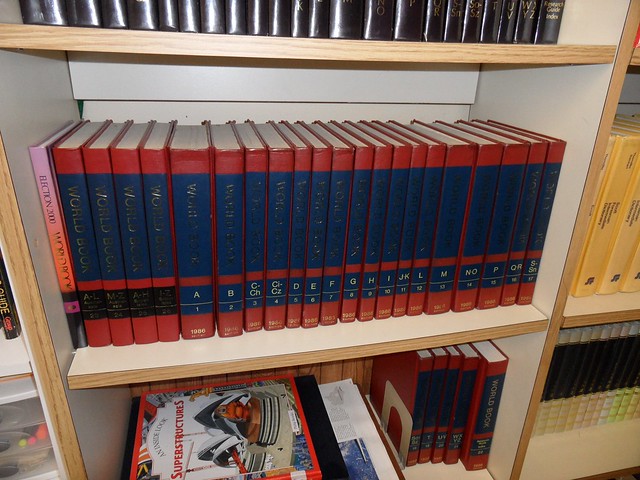
When I was 10, it meant I would pull out the World Book Encyclopedia --whatever letter-volume I needed to address my topic, I would find the appropriate entry, and read it through once to make sure the article had everything on the outline--we used outlines to write everything when I was 10.

If I was writing about an animal, that meant I probably needed to find out where it lived, what it ate, and how it raised its young. I might also have to include what it looked like, including distinguishing features.

If I was writing about a country, that meant my outline probably included the location, population, cultural indicators--along with representative pictures-of music, food, and clothing.  I might also be required to find out about schooling and what children my age did for fun.

You get the idea.

Paragraph by paragraph, I would painstakingly transpose, substitute, omit, and add words, so that I was "reporting in my own words".

 We were not allowed to "copy". (I don't think I ever heard the word paraphrase until much later in my school career -- it sure would have been useful at 10.)

I usually got an A on my resulting report.


Fast forward.

For many years during my early teaching, my own students created reports using much the same process  as mine at 10.

We had a meager library in our school.  I don't remember it having many nonfiction books available.  If they were there, we did not check them out.

We had an old set of World Books in my first classroom--about ten years out-of-date.

I also had amassed a classroom library of information books by requesting related sets from the main district library-- again, many out-of-date books.

Once my students had located their one needed book, one book on their topic).... they repeated my above process.


Flash Forward.

In later years, I began to question the notion of research and observe my own processes, especially as I got personally interested in my own topics, and engaged in authentic quests for information,  gained new understandings and increased my personal learning  for real purposes.

What did I do?
Usually passion drove my search.  I wanted to know.  I wanted to learn.
My search led me to books, articles, poems, websites, people, places where information could be obtained...back again to books, articles, old notes, new notes, websites, blogs, people, places...

The search was always recursive and generative... leading me back to  previous sources for different reasons and to additional sources discovered along the way while searching.

 What did I do?
I took notes furiously... on yellow legal tablets-- then.  On my iPad or computer now.
I tore out pages of magazines or journals to save,  I tabbed book pages,  I bookmarked webpages for later,
I copied and pasted.
I noted sources, recorded references--- lots of them.

What did I do?
I reviewed and organized what I found.  Did I find what I was looking for?  Do I still have questions?
What do I still need?

I realized that what I did, I needed to teach my students-- allow my students, encourage my students--to do the same as  they wrestled with self-selected  topics of interest and real  issues.

In The Pet Project: Cute and Cuddly Vicious Verses by Lisa Wheeler,  a young girl engages in scientific research to decide what kind of pet she would like to get.  The resulting verses provide humorous  research guide of sorts that  makes a wonderful introduction to the notions of authentic research for young students.

It drives home the role of  real questions,  authentic needs to know, and  demonstrations of the processes and work involved.


At NCTE 2012 I heard Chris Lehman speak about  notetaking and researching for students.

He reminded us that we all do research all the time for authentic reasons  and gave several examples, such as when the  doctor says you need a procedure that you don’t want , so you research alternatives, or deciding what book to read next, or figuring out how to fix your car, or  deciding whom to vote for in the  upcoming election.

 What do we actually do as adults in real situations when we are investigating an issue, researching a topic,  figuring out what we  need to know and deciding how to find out?

This is what we need to teach.

I came to this conclusion ...and so did Chris Lehman. In Energize Research Reading and Writing, he talks about helping students narrow down topics and  evaluate sources:


Teaching students to research... does not begin by assigning finite  topics and handing out preselected sources.  Instead, it begins by embracing the uncertainty all of us feel when first researching a topic, then, teaching budding researchers to do the things we have learned to do...
... The skills of research begin from  the very first : "I must learn about..." We need to teach from that starting point ... 
Step by authentic step, this useful resource enlivens research for you and your students and provides a framework for doing real work-- real research--after the " I need to learn about.."


 As you encourage research and reports with your writers,  my previous post on inquiry and questioning, Wonderings, What-Ifs and Other Questions,  may be a helpful starting place.


Today's Deeper Writing Possibility

What do you want to know or learn or understand?
What questions do you have?

Make a list of things you are wondering or want to investigate.

Choose one question or issue or topic to research.

Where will your search begin?
What resources will be helpful?

Once you have enough...begin to review and organize your information.
You may even want to write a report or essay  summarizing responding to what you found.

Enjoy the process, Savor the journey.