What lenses do we wear as we read books or articles or other texts?
What lenses does the author wear?
How do we see the information--specified or implied-- in a text?
We look at the world, everything we see, everything we hear, all that we read, through our own perspectives, our own personal lenses. At any given time we are wearing at least one lens--most than likely, more than one.
When we look, for example, at the American versions of the old Little Black Sambo children's book written by Helen Bannerman--we know we are looking at stereotypical and racist images. No matter who we are, we know that people are offended by the images, as well as the title of the book.
The images are overtly and unapologetically negative depictions of Africans, which I find interesting since the story is actually set in India. The original illustrations in England were of an Indian child. The depictions of an African child occurred first in a 1927 American version.
It always amazes me to read the comments on various Internet pages describing how much folks loved this book as children--and in some cases, still--- blindly accepting the images, along with the story.
We know how to categorize the negative images contained in the book.........now.
The story or plot itself is a good one--- retold and reprinted in many versions, and has in the last two decades been more positively reimaged and rewritten by several children's authors and illustrators, including Julius Lester and Jerry Pinkney, Christopher Bing, and Fred Marcellino.


The Five Chinese Brothers written in 1938 by Claire Hutchet Bishop is the negative Asian equivalent of Little Black Sambo. Here also the images are stereotypically racist. Again, the story or plot is good, and in recent times the story has been retold and rewritten, with several positive versions being released.


But how do we look at texts that are a bit more subtle?
Books like The Giving Tree, or The Rainbow Fish, or Tico and the Golden Wings.
What do they show us and teach us?
They each could be read through the lenses of sharing and giving. Or on the other hand, they could also be read as teaching us that we must give up everything we have and everything we are in order for people to like us, to want to be with us.
Do we really have to give up our metaphoric feathers or scales to be accepted?
Do we really have to become a stump of ourselves to be of value?
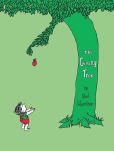
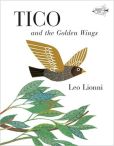
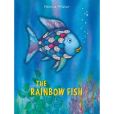
And when we share books about families, are we including everyone-- or are we portraying only one possible family configuration? Can the child whose father does not live in his house see himself? What about the child living with grandparents? Or the adopted child? Or the children living with their father? Or two moms? or two dads?
For Mothers' Day this year, The New Yorker ran an image created by Chris Ware showing two mothers reading their card from their children

What do our books show us about identity and play and work and friends?
Are we choosing books in which each person can look into a mirror and see herself--as well as look out a window to see alternative others.
What lenses are we wearing? What lenses does the author wear?
Are we presenting a single story---or a range of possibilities of stories?
We all remember the Four Horseman riding through the pages of Revelation in the Bible-- ushering in the apocalypse, portending coming judgment. Toni Morrison adjusts her lenses in Beloved--seeing four white men on horses riding in to capture Sethe, who in return attempts to kill her own children rather than see them captured.
Morrison writes of Africans flying in Song of Solomon, as does Walter Mosely in 47. These are not references to Icarus as one might automatically think, depending on the lenses being worn, but, instead, refer to John the Conqueror and the traditional belief that before being brought to America, he, along with other Africans could fly----and that some still could and might possibly return home in this manner.
We read so often about Rosa Parks being tired as the reason for sitting, negating her choice and agency in the events that lead up to, and followed her now--famous arrest. See previous related post, She Would Not Be Moved: Celebrating Rosa Parks.
Morrison writes of Africans flying in Song of Solomon, as does Walter Mosely in 47. These are not references to Icarus as one might automatically think, depending on the lenses being worn, but, instead, refer to John the Conqueror and the traditional belief that before being brought to America, he, along with other Africans could fly----and that some still could and might possibly return home in this manner.
We read so often about Rosa Parks being tired as the reason for sitting, negating her choice and agency in the events that lead up to, and followed her now--famous arrest. See previous related post, She Would Not Be Moved: Celebrating Rosa Parks.
What lenses are we wearing?
Are we reading and sharing books that allow us to determine and examine the lenses being worn by others?
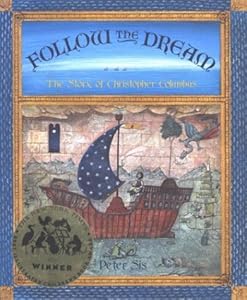
For example, as we consider Christopher Columbus, we may want to offer several versions of texts, telling as many sides of the story as we can. Follow the Dream: The Story of Christopher Columbus by Peter Sis tells the story from the perspective of Columbus and also his crew, while Encounter by Jane Yolen tells the story from the perspective of the people he encountered.


Are we reading and sharing books that allow us to determine and examine the lenses being worn by others?
For example, as we consider Christopher Columbus, we may want to offer several versions of texts, telling as many sides of the story as we can. Follow the Dream: The Story of Christopher Columbus by Peter Sis tells the story from the perspective of Columbus and also his crew, while Encounter by Jane Yolen tells the story from the perspective of the people he encountered.

Our responses to both children and adults, to their conversations and their writing--- our responses to who they are--- are filtered through the personal lenses that we wear.
We view butterflies (and everything) according to our experiences and knowledge---or lack thereof. One of my favorite stories illustrating this point is Butterflies by Patricia Grace.
I have shared this story with teachers many times as we talk about responding to our students' writing. Below is the last part of the story. Click here to read the entire story.
....You write your story?”
“Yes.”
“What’s your story?”
“About the butterflies.”
“Get your book then. Read your story.”
The granddaughter took her book from her schoolbag and opened it.
“I killed all the butterflies,” she read. “This is me and this is all the butterflies.”
“And your teacher like your story, did she?”
“I don’t know.”
“What your teacher say?”
“She said butterflies are beautiful creatures. They hatch out and fly in the sun. The
butterflies visit all the pretty flowers, she said. They lay their eggs and then they die. You don’t kill butterflies, that’s what she said.”
The grandmother and the grandfather were quiet for a long time, and their granddaughter, holding the book, stood quite still in the warm garden.
“Because you see,” the grandfather said, “your teacher, she buy all her cabbages from the supermarket and that’s why.”
What lenses did the Grandparents wear? The child? The teacher?
Best-selling Nigerian author Chimamanda Adichie, eloquently talks about the importance of telling and hearing all sides of the story in her TED Talk, The Danger of a Single Story.
What is your story? What lenses do your wear?
You may want to also read previous related post Wrapping Our Words in a Container Lining.
Today's Deeper Writing Possibility
Who are you and what lenses do you wear?
List your roles, indentities, positionings, philosophies---- all the lenses that you wear.
For example, my list includes: woman, black woman, wife, stepmother, daughter, Christian, Episcopalian,retired educator, short person, middle-aged? etc.
Consider the book you are currently reading.
What does __________ (character) know, believe, and feel?
What does this text say about the world?
What is your own perspective?
Who is telling the story?
Whose story is being told?
What does the author know, believe, and feel?
What does the author assume you know and believe?What does __________ (character) know, believe, and feel?
What does this text say about the world?
Write a reflective piece about the perspectives, positionings, philosophies, messages and images in your book.
What did you learn about your own lenses? Your own story? The story of others?