After this long (still on-going) winter, OCTELA 2013 was a fresh breath of spring learning.
(See the previous post sharing insights gleaned from J. Patrick Lewis's morning keynote presentation at OCTELA 2013.)
The learning continued as a our lunchtime keynote speaker, Ally Condie, shared how reading specific books throughout her life influenced the writing of her popular books, The Matched Trilogy (Matched, Crossed, Reached)


As I listened to her share her experiences with books and art and family, and other people who were willing to support her in writing, in reading and in life, I couldn't help but consider the books that have influenced my own reading and writing and life.
What is the book you wanted to live?
I never caught the Little House fever-- those books are not my cup of tea--although many of my fourth and fifth grade girls read Little House exclusively for a period. They kept our school library shelf on which those books were kept empty most of the school year. They eagerly added their names to the waiting lists for those volumes checked out and being enjoyed by some other little girls not from our class, and they shared and compared plots, crushes and other Little House information.
 I, on the other hand wanted to live, at 9 and 10, the teenage life I read about in Betty Cavanna' s books, which had absolutely nothing to do with my actual life.
I read every one of her books that my small local library owned. (Although I vividly remember the books, I could only remember Betty C-something for the author---the Internet is a wonderful external memory and retrieval system)

I read every one of her books that my small local library owned. (Although I vividly remember the books, I could only remember Betty C-something for the author---the Internet is a wonderful external memory and retrieval system)
What is the book in which you recognized yourself?
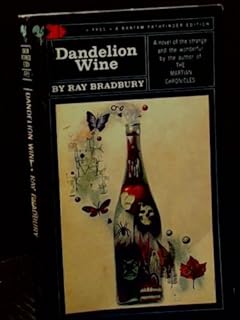
Ally wanted to teach Dandelion Wine by Ray Bradbury early in her career. An older more experienced teacher challenged her choice Oh honey, you have to be good to teach Dandelion Wine-- I don't know if you are that good.Of course that kind of challenge dictates that you rise above the concerns, the objections, and doubts. She learned from this experience that if things go badly, it is not necessarily you. And likewise, if things go well, it is not necessarily you, either.
She linked Match to her experiences with a Junior Prom in a small Utah town. Each junior girl with no date was matched with senior boy. This had been the custom--an intended merciful and kind practice-- for a long time.
In discussions with her husband, and influenced by the distopian 1984, she wondered what if the government did get to decide who you married? Don't all good stories begin with a What if?
This is the book that helped me, like Ally , to understand:
As things are, they have not always been-- as things are, they will not always be.
What is the book that changed the way you read? And also perhaps the way you write?

Crossing to Safety by Wallace Stegner was this book for Ally.
She recounts how she read this book over and over. From him she learned the importance of setting. Her painter mom also helped her to understand that seeing is critical and how we are changed in the moment of creating, whether with chalk and paint, or with words.
She recounts how she read this book over and over. From him she learned the importance of setting. Her painter mom also helped her to understand that seeing is critical and how we are changed in the moment of creating, whether with chalk and paint, or with words.
In Match, the setting becomes crucial as her characters needed to live in an unfamiliar environment. She relied on her mother's advice about seeing and her brother's expertise in the outdoors.
The books for me that changed the way I read, and opened up possibilities in writing are those that are written in non-traditional ways--multigenre, epistolary, linked vignettes, alternate perspectives, graphic or comics--different in some way.

Older books that are complex in style and challenged my thinking include: The Name of the Rose by Umberto Eco, The Color Purple by Alice Walker, and Maus by Art Spiegelman. Each in its own way, offered me new frameworks for telling stories and thinking about writing.
What is the book you can't put down?

.
For me, it has varied over the years--- my perennial favorites are Anne Rice, Milan Kundera, Toni Morrison, Junot Diaz.... and more
In an earlier post Because of That Book, I listed books that have changed me--many of these are my can't-put-down selections.
What is the book that changed the way you look at people?
The book that kept her asking the same question is Saint Maybe by Anne Tyler
The lesson in this for Ally, and for us is:
You give people enough when you are writing or making art (or teaching), but always there is this possibility at the edge of it, which is not so clear that there is not room for imagination

These are each books that no matter how many times they are read , that white reflection at the edge of understanding can not be just a boat...
Ally Conde gave us much to ponder and remember, as she took us on her journey though the books that have influenced her reading and writing and her life.
She left us with this final pearl:
When the teacher says write what you know--all of what has come to you and been a part of your life enters into the process.
What books have influenced your reading and writing and enter into the process when you create new texts?
Today's Deeper Writing Possibilities
Reflect on your reading and writing life-- your literacy development and history.
Recall Ally Condie's categories of books and think about them in your own life.
What is the book you want to live?
What is the book in which you recognize yourself?
Which book changed the way you read?
Which book can you not put down?
Which book changes the way you look at people?
Using Ally Condie' s five questions as a framework, write an essay or personal narrative.


