Friday, March 15, 2013

READING ON THE WAY TO WRITING


Writers read.

What are you reading?       

If you want to write, you must be reading---filling your head with wonderfully simple plots or delightfully complex ones with lots twists, turns,  and  surprises-- gathering new narrative possibilities for your own writing.

If you want to write, you must be savoring poetry that reflects your life, shows you the perfect metaphor for what happened yesterday, or names what was unnameable until that one particular poem read on one particular morning named it for you.

If you want to write, you must  be reading nonfiction, informational texts, newspapers and  journals--current events, local goings-on, and reflective essays provide much ink for your pen. And literary journals keep you abreast with what your peers and literary superheroes are writing.

If you want to write, you must be filling your head with language and words and  ideas-- and life.

If you want to write you must read--a lot.

You must read like a writer, not only enjoying, savoring, and learning, but also noticing and naming what writers are doing in  texts, and later imitating to create your own texts.

In a previous post, we considered the important role of reading and mentor texts. (see Mentor Texts: Learning to Write from What We Read)

 In Language Arts (May 2008, Vol. 85, No. 5), I wrote the following about reading like a writer as part of a review of  Wondrous Words by Katie Wood Ray :


...Katie Wood Ray invites us to not simply appreciate the finished product, but to closely and critically examine the underside to see how the colorful patterns were created. Likening the search for writing ideas to a seamstress shopping, she reminds us that the seamstress will “take a lot longer . . . turn jumpers and shirts inside out, sometimes sitting on the floor to study how something is made. While the rest of us mere shoppers are looking only at sizes and prices, (Katie’s) friend is looking closely at inseams, stitching and ‘cuts on the bias’ . . . she is shopping for ideas for clothes.” 
Katie Wood Ray challenges us to push beyond mere reading purposed for enjoyment and understanding; she urges us to become apprentices to other writers, to learn the craft of writing by eagerly examining, deliberately deconstructing, and intentionally imitating the work of other writers.

Writer read.
And... writers read like writers.

So what am I reading?
What am I reading on the way to writing?

I am currently engaged in reading a number of books for a variety of reasons.

Each morning after reading the morning office in the Book of Common Prayer, I read the day's appointed devotions from two sources.  

Can I use the beautiful language  and  complex, formal sentence structures I find here in my own writing? 


I love poetry and have fallen in love with the work  of Richard Blanco, the young poet who read  One Today at Barack Obama's second inauguration.  I am reading his chapbook, Place of Mind.  And a second book by Blanco rests in my to-be-read pile. 

Can I write about home and history and the sea like Blanco?


For the class I am taking  on digital writing, this week we are reading one of our several texts,  Learning in the Cloud: How ( and Why ) to Transform Schools with Digital Media by Mark Warschauer.

Here I find several charts and suggested content that will help me complete my matrix-- Ways to Work with Digital Tools-- an assignment for the class which details my recommendations for instruction and professional development in digital writing. 


I will be featured on NWP Radio on March 28, along with Lynne R. Dorfman, co-author of Mentor Texts, Teaching Writing Through Children's Literature, K-6.  I  am looking forward to this and in preparation for our conversation, I am rereading one of  Lynne's books.

Can I effectively use and encourage others to use mentor texts in new ways?


Additionally, I am reading, in spurts, two other professional books, Ralph Fletcher's new edition of What a Writer Needs, and Christopher Lehman's Energize Research Reading and Writing. 


I saw Lehman speak at NCTE 2012 and wanted to read more of his ideas. I have used the first edition of Fletcher's book for years in my own teaching, and with teacher writing groups, so naturally I needed to check out the second edition..

In addition, I am currently deeply interested in sentence crafting, so I am slowly working my way through How to Write a Sentence: And  How to Read One by Stanley Fish.

Can I write nonfiction clearly and creatively like Fletcher and Lehman? Can I utilize new sentence structures that will better convey my meanings?
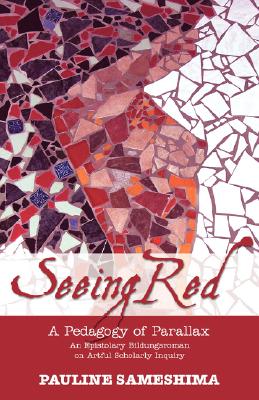

Finally I am also reading Seeing Red- A Pedagogy of Parallax: An Epistolary Bildungsroman on Artful Scholarly Inquiry by Pauline Sameshina ...just for my personal pleasure.

Can I write an epistolary poem embedded with information
about teacher education or writing instruction or some other academic field?


And then there are whatever current entertainment, cultural, news, professional or literary magazines and journals that have arrived.  I won't list all of those.


And  of course, there are several piles of next books, piles to shop through when I am ready for something new.

From all of these books that I am currently reading, I  am learning more about writing. I am seeing new writing possibilities.

Writers read.  And  writers read like writers.

What are you currently reading?


Today's Deeper Writing Possibility

What are you currently reading?

You may want to actually make a list.

What is each text teaching you about writing?

What might you write that is inspired by each text?


Wednesday, March 13, 2013

WRITING, BEING, AND BECOMING


Are we what we write?

Do we become what we write?

This notion had arisen in my reading and conversations several times lately.

I know that I write sometimes to discover what I think. Does that, in turn, determine who I am and who I become? 

Exploring life's unfolding in writing is a treasured treatment for what ails us,  a magic code ring for what puzzles us,  and a refuge from that which would otherwise, perhaps, defeat us.

In my Teacher Leadership in Teaching  Digital Writing  Class with Troy Hicks and several Columbus Area Writing Project teachers this past Sunday evening, the question arose, As we write or contribute and participate online, are we creating ourselves? Are we creating new identities?  Several of us who blog then wondered Who are we as bloggers? Does the writing change us?


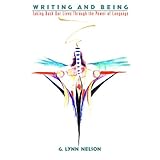
According to G. Lynn Nelson in the introduction  to his book Writing and Being: Taking Back Our Lives Through the Power of Language, "writing is a tool for intellectual, psycological, and spiritual growth."  He goes on to say that we cannot,"study language and writing in isolation, apart from the people who speak and write, and apart  from what happens when people speak and write. Apart from our being."


"Every person is born into a life as a blank page--and every person leaves life as a full book...we ..weave life events into narrative and interpret  everything that happens through the veil of the story.", says 
Christina Baldwin in the preface to Storycatcher: Making Sense of our Lives through the Power and Practice of Story.

So maybe in a sense we do, indeed, write ourselves, our stories and our relationships into being.


I am currently reading and thoroughly enjoying a rather uniquely written dissertation, Seeing Red-- A Pedagogy of Parallax: An Estolary Bildungsroman on Artful Scholarly Inquiry by Pauline Sameshima. In this epistolary novel, doctoral student Julia,  writes letters, sometimes subtly steamy, to her advisor, Red. Woven into those letters, are also her theories and research about teacher education, as well as the mosaics she creates, and bits about her life outside of her studies.

One concept explored throughout Julia's letters is that she believes she is being created as she creates.  At one point the she writes:


As we perform, paint, write music or poetry or fiction, we are conveying complex ideas and often these ideas are the complex parts of ourselves we are coming to understand as we are creating.

Julia also wonders how personal identity influences who we are as teachers, and also, on a separate note, if the growing love she feels for her advisor is created as they write back and forth. (We only read her letters not his.  We can only infer his responses.) 

So I wonder then --Did Anne  Frank become the Anne Frank that we know, as she wrote her teenage entries in her diary, as she explored her relationships with her sister Margot,  as she fantasized about  boys, as she negotiated life with her parents and her small  world in the attic-- and the larger world in her head?

Did Anais Nin create herself in her diary?  Did Sylvia Plath write Sylvia Plath into being through  her journals and other writings?

I took this question into my own past notebooks and journals--Did I create myself as I wrote?


I have always named each volume in which I write.  It seems even the names signify  a creating of a specific self in a specific time.
.
From my 1981  journal:
 ....I begin a new book and renew life...many things were not present when I arrived at the beginning of the previous volume, Collages....saw fragments in my life.. Piece by piece the fragments are falling into position to form  a complete--a new Lifeframe.  
Did I write into being  a more complete self?
An excerpt from  the opening  entry of the 2003 volume, Ancient Paths, in which I was recounting lessons from Returning, the previous volume, :
First of alI, I have begun to learn and experience the secret of contentment and the joy that can not be taken away... ..the older I get --the less time I am willing to waste on petty, trivial and unnecessary drama, disruption and disorder.
Did I write myself to a greater contentment?
From my current volume, Deeper Writing,
Sometimes poetic phrases  are written as healing balms, providing space to say the things we all want to say;at other times, the reader is simply being led through the landscape of Everywoman's life; at still other moments they are meant to serve as maps for discovery of hidden treasure, windows into the inner heart, and all else that we can't discern with our eyes alone.

Did I/ Do I write myself into new understandings?  

Do I write myself into being? 

Do we create ourselves as we write?

Do we become what we write?


Today's Deeper Writing Possibility

Today try freewriting about yourself for 10 minutes.

Begin to  simply write without a preconceived notion about where the writing will go or what you intend to say. This writing can take any form that emerges.

Who are you in this writing?
Who did you "become" in the writing?


Monday, March 11, 2013

THE WRITER'S NOTEBOOK-- PART 2 (RESOURCES)


Writer write.

Are you writing in your writer's notebook?

Are you recording your thoughts, observations,  scraps of poems and pieces of story ideas.

Have you started a draft in your notebook of  that letter to the editor or other piece that you have been meaning to write?

In the previous post, The Writer's Notebook, Part 1, we considered how and why to keep a writer's notebook. Today  I want to share resources that will suggest a variety of ways to explore writing in your notebook.

Many writers find books about writing and writing exercise books to be useful sources  of inspiration-- they suggest ways to play with language, experiment with forms, explore topics of interests, and to write what you didn't know you wanted or needed to write.  

I am always working my way through  such writing guides or companions.

It helps me deliberately practice writing using techniques that may be new to me, that I might not have thought  of or known  to use-- it helps me become a better writer.

 It also gives me a wide range of experiences and  a great store of ideas, as I design and develop writing possibilities for others.  I am always on the lookout for these supportive texts. 

One excellent source for books on writing, no matter what the focus you are seeking, is the Poet and Writers Best Books On Writing Page. You will find on this list many books that will support you, as you experiment and explore.


In Writers and Their Notebooks,  Diana M. Raab gives us a wonderful colleciton of essays by professional writers, sharing how they use their notebooks to explore and discover new language and writing.  Included in the collection are sample journal or notebook entries and  excerpts of early drafts of now published pieces 

I am currently interested how we craft powerful sentences-- improving my own technique and capacities in this area and building on sentence work I developed with my students.  So I am working my way slowing through several related books including,  How to Write a Sentence  by Stanley Fish, and at the same time rereading Short Sentences about Writing by Verlyn Klinkenborg.


Personal Favorites


My favorite books--the ones I  return to often--may also be helpful to you  I value these book because they allow me to write to the same prompts or suggestions several times, producing something entirely new each time.   


Resources for Teachers

If you teach writing, these are books may assist in supporting your students and their work in writer's notebooks 


And these additional texts will support you as you develop and design mini-lessons,  short writing invitations, and consider writing possibiliies for your students using mentor texts ( See previous post, Mentor Texts: Learning to Write from What We Read)


Resources for Students

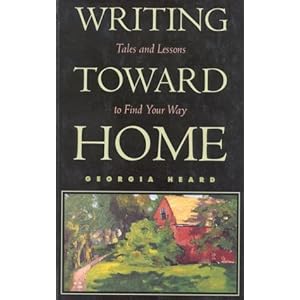
Several excellent texts are designed specifially for the writing student and will support them directly in their notebook work and their writing lives.


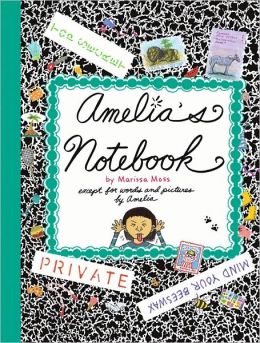
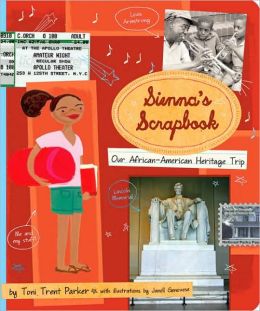
Finally, you  will also want to provide your students with models of notebooks to show both textual and visual possiblities as the create their own notebooks.These are a  great start.
Amelia's Notebook by Marissa Moss
( See the entire series of Amelia's NotebooksO
 
Sienna's Scrapbook ; Our African American Heritage Trip
by Toni Trent Parker
My Name is Mina by David Almond
I invite you to explore these resources and to experiment with the many possiblities provided by them  for you and your students as you create your own writer's notebooks.

I also invite you to share in this space the notebooks you are creating.

Today's Deeper Writing Possibility

In your notebook braintorm a list of writing possibilites.  

Include current events, relationships and observations in your life and in the world. 
List your wonderings and your wanderings.
List your accomplishment and achievements and your failures and regrets.

Select an item from your list on which to reflect.  Write your musings and questions related to this item.

To what new topics does your writing point?  Add those new possilibities to  the list above.