Showing posts with label mentor texts. Show all posts

Tuesday, July 8, 2014

WHO PUSHES MY PEN AND GUIDES MY TEACHING?


I write riding on the pens of those who came before me.

I teach writing  looking over the shoulders and peeking into the minds of those who created new images of what writing instruction could look like.

It was almost 30 years ago, that Jim Sims, the Language Arts Director for Columbus City Schools, handed  me, along with my two colleagues and friends, Melissa Wilson and Marlene Beierele, copies of Writing: Teachers & Children at Work by Donald Graves,  with directions to read it and see if we could use some of the ideas as we wrote the new elementary writing curriculum for our school system.

We each went home and dipped into this book; we each read the entire book in one sitting. We returned the next morning on fire-- exhilarated and brimming with new thinking.  We did not write that day, but instead talked and processed, reacted and responded, sorted and discussed what we had read, the new ideas and principles we had encountered,  and what they meant for the work we were doing.

From Graves, we learned that children learn more about writing each time they write, if given the time to write. He taught us that children could write about people, places events, and feelings that were real--they could plumb their own lives for interesting, write-worthy topics. He challenged us to consider the interactions and contexts in which we were asking  a child to write, what the child brought to the writing by way of skill and knowledge, and how we could teach what the child still needed in the context of her writing.

I know this all sounds familiar and routine in 2014, but in 1985, this was revolutionary.

And yes, much of Donald Graves' thinking went into the Writing Guide that was used in our district for  more than a decade.


 A year later, our same team was asked to revise the newly minted guide. That year we were given The Art of Teaching Writing by Lucy Calkins. From her work we welcomed and incorporated the notion of mini-lessons.  These short lessons provided necessary instructional scaffolding to foster better writing.  They addressed the needs of the students as they arose--presenting, modeling, and guiding the use of all aspects of the writing process.

This was just the piece that was missing from our evolving thinking and our previous guide.


Now armed with new and revolutionary thinking that dramatically transformed how we thought about writing, and  how we taught writing, the questions became How did this all fit in with the rest of our day?  What does this really look like in the classroom?

Enter Regie Routman  with Transitions, Invitations, and Conversations. Her books became staple texts in several literacy initiatiatives in our district.  They showed us possible frameworks for teaching all of the language arts-- how to incorporate our new thinking into our teaching day with real students in real classrooms.


It seems that just when we were ready for more, the next needed idea would arrive, the next important principle would emerge.
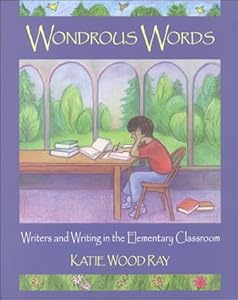
Katie Wood Ray's Wondrous Words: Writers and Writing in the Elementary Classroom  was right on time.She taught us how to use mentor texts to learn how to write what we wanted to write.  She affirmed that it is through reading that we are able to learn about writing, as we ask what words, structures, techniques and strategies a writer has used to achieve a desired effect.  She helped us deconstruct texts-- noticing, identifying, and naming what authors have done-- and  begin to use those same moves in our own writing, and more importantly, to help students use them in their writing, as well.

And synthesizing all that we learned, Ralph Fletcher reminds us of the areas of expertise on which we draw to teach--  all that we know about language and writing, all  that we know about the world, all that we know about our students and teaching.  He reiterates the need for mentor authors and texts, and considers elements of craft.  What a Writer Needs is what we needed to extend our own knowledge and confidence, and that of our writers.


In more recent years, as I worked to help my students develop more sophistication and creativity in sentence construction, I turned to Don and Jenny Kilgallon and their sentence imitation models. Along with their resources and my own systematic instruction that I gradually developed with my students, we saw vast improvements in this area. There is at least one text for each level, with all  of mentor sentences are excerpted directly from classic and contemporary literature. (My sentence work will probably be the focus of a future post.)

.


And finally, as we place greater emphasis on nonfiction, as we focus more on writing essays, research, and arguments, as well as the transition to college writing, the following resources have been  essential. In fact, I reread Critical Passages: Teaching the Transition to College Composition periodically for the benefit of my personal writing.


I gratefully acknowledge my mentor teachers.

I appreciate their books that have led to transformation of writing for me, as well as the instruction I offer to my students

I thank the writers who push my pen and whose voices I hear in my head as I teach writing.

Today's Deeper Writing Possibilities

As a teacher, whose shoulder do you stand on as you teach?  Which books have most influenced the way you teach writing, or your specific content area? What have you learned from your mentor teachers and texts?

If you are not a teacher, whose shoulders do you stand on in your chosen field? What books and resources have been essential in your growth and maturation?

Write a history, essay, or personal narrative detailing your evolution in writing life, teaching life, or professional life.


Wednesday, October 16, 2013

MENTOR TEXTS MUSINGS

So much depends
upon

a  right angled
question

iced with multiple
meanings

inside our essential 
topic


I thank and apologize to William Carlos Williams for his gift,  the often-used mentor text (The Red Wheelbarrow), which assisted me in thinking  about the task before me.

I am thinking about mentor texts.

More specifically, I am thinking about which questions will evoke critical thinking about mentor texts.  What questions and quotes will provoke reflective conversations around mentor texts?  
What questions will foster new insights and expanded learning concerning  mentor texts?

I am privileged to be facilitating a session with fellow NWP teacher consultants/authors Lynne Dorfman, Rose Cappelli, and Carla Truttman at the National Writing Project Annual Meeting in Boston.

We present on Thursday, November 21, 2013.

C15: Collaborative Conversations: Exploring the Use of Mentor Texts Across the Curriculum
3:30pm - 5:00pm Hynes, Level 2, 205

What is a mentor text? What makes a quality mentor text? How do we choose and help students find appropriate, real-world resources to use in our classrooms to inspire writing? Join us for interactive roundtable discussions about how teachers across the grade levels and disciplines use mentor texts from all genres to teach writing and expand thinking.
Presenter(s):
Rose Cappelli, Pennsylvania Writing and Literature Project 
Lynne Dorfman, Pennsylvania Writing and Literature Project 
Robin Holland, Columbus Area Writing Project 
Carla Truttman, Northern California Writing Project 


We have never met in the physical world.

I am eagerly anticipating meeting in person these ladies whom I have only  "met" through the airwaves--on the radio, on the telephone, through email, and Google.docs.

I have learned from each woman, as we began a conversation about mentor texts on NWP Radio, and as we continue to communicate in various ways to prepare for our NWP session.
Listen to our  previous conversation on NWP Radio Program, Reading, Writing, and Mentor Texts:Imagining Possibilities  which originally aired March 28, 2013.

We each agreed to post three questions on our Google.doc planning document before we "meet" again at the end of the month--questions designed to initiate thinking and talk in our session. 

So... I am allowing questions to swirl and dance around me, to hover just above my reach.  I am musing and pondering, wondering and wandering through my own understandings around mentor texts.
I am identifying my own questions -- and those that teachers often ask me in presentations.

What do I know and believe at this moment about mentor texts?  
What am I still seeking to understand?

Last Saturday, I had the opportunity to present at the OCIRA Conference in Cincinnati.

One young participant, a student teacher, considered the mentor texts I had shared as we talked about developing  writing ideas and creating deeper writing possibilities. Perhaps feeling a bit overwhelmed as she thought about the huge volume potential selections in the book universe, she raised an excellent question:

As new teachers, how do we begin to choose potential mentor texts? How do we know where to start?

Along with the other veteran teachers in the room, I assured her that in time she would intimately know many books.   She would, indeed, need to take the time ( and it would take time) to begin to know books.

But in the meantime, as a started point,  I suggested that she think not about specific books so much, although she will certainly discover many books to love. Instead, I suggested that she focus on particular authors---those wonderful writers without whom many of us could not teach writing.

Those excellent writers who produce a variety of types of texts, all and always high quality literature for all ages-- picture books, early and middle chapter, as well as essays, books about writing craft, novels, poetry and also adult texts.  By knowing the work of several authors well, she will have a beginning pool of excellent books from which to choose when selecting mentor texts, when wanting to highlight a particular feature, element or structure. She will have a pool of excellent writers to stand beside her as she teaches writing.

Who do we include on that list of must-have authors?
Well for starters... but definitely not a complete list,  I could not teach writing without the books of the following writers:. Theirs are the books I find myself returning to again and again for many different reasons.


Eve Bunting
Sharon Creech
Sharon Draper
Nikki Giovanni
Nikki Grimes
Virginia Hamilton
Julius Lester
J. Patrick Lewis
Lois Lowry
Patricia MacLachlan
Walter Dean Myers
Christopher Myers (his son)
Marilyn Nelson
Patricia Palacco
Linda Sue Park
Cynthia Rylant
Allen Say
Peter Sis
Shaun Tan
Chris Van Allsburg
Jacqueline Woodson

Jane Yolen
Who are the authors without whom you could not teach writing? 
What other advice would you give to new teachers who are  just beginning to use mentor texts?


My students used to laugh when I would begin to introduce a book.  Mrs Holland, you always say the book/the author is your favorite.  You love them all!  

They were right,.  I have not yet read anything that did not teach me something about writing. And rarely did I share a book or texts that I did not love.

As I share models of writing and mentor texts with writers, there are some books that I manage to work into almost every presentation, class or workshop-- my "perfect" books.--those that can be used on a variety of levels to model a variety of writing possibilities-- those that are simply perfect  and complexly wonderful..


Here are my top three (at this moment):
          

I managed to mention  A Wreath for Emmett Till  at OCIRA last Saturday, despite that fact that it was not in my notes nor on my slides.--- it fit the conversation.

And this is my newest favorite because of the complex structure and unique writer decisions-- I have not yet had a chance to use it with  writers:


What are your all time favorite, most versatile mentor texts--those that you appropriately work into every lesson, presentation or conversation, if possible?

As we implement the Common Core State Standards, it is crucial to note that reading and writing are expected to take place, as they should, in all content areas, including social studies, science and math.

What does reading and writing look like in those subjects?
What are appropriate mentor texts for content area writing?  
How can mentor texts be used to foster expected discipline-specific writing, language and forms? 

What was the last discipline specific text you read?  What did it teach you about writing?


And finally, we all know that just like everything else, there is a chance we may choose the wrong text-- an inappropriate text for the potential writing or the writers in front you.

What cautions or caveats would you share about choosing or using mentor texts?
When have you been less than happy with an experience? 
What did you learn about mentor texts and writing from your unsuccessful experience?

What do you know and believe about mentor texts?
What are you still seeking to understand?

Today's Deeper Writing Possibilities

Reflect on your own writing practice.  
Who are the writers that have most influenced your writing? 
Who have you imitated? From whom have you borrowed?

Which books or other texts have taught you important lessons about writing?

Write a reflective essay about the authors and texts that have most influenced your own writing.

Friday, March 15, 2013

READING ON THE WAY TO WRITING


Writers read.

What are you reading?       

If you want to write, you must be reading---filling your head with wonderfully simple plots or delightfully complex ones with lots twists, turns,  and  surprises-- gathering new narrative possibilities for your own writing.

If you want to write, you must be savoring poetry that reflects your life, shows you the perfect metaphor for what happened yesterday, or names what was unnameable until that one particular poem read on one particular morning named it for you.

If you want to write, you must  be reading nonfiction, informational texts, newspapers and  journals--current events, local goings-on, and reflective essays provide much ink for your pen. And literary journals keep you abreast with what your peers and literary superheroes are writing.

If you want to write, you must be filling your head with language and words and  ideas-- and life.

If you want to write you must read--a lot.

You must read like a writer, not only enjoying, savoring, and learning, but also noticing and naming what writers are doing in  texts, and later imitating to create your own texts.

In a previous post, we considered the important role of reading and mentor texts. (see Mentor Texts: Learning to Write from What We Read)

 In Language Arts (May 2008, Vol. 85, No. 5), I wrote the following about reading like a writer as part of a review of  Wondrous Words by Katie Wood Ray :


...Katie Wood Ray invites us to not simply appreciate the finished product, but to closely and critically examine the underside to see how the colorful patterns were created. Likening the search for writing ideas to a seamstress shopping, she reminds us that the seamstress will “take a lot longer . . . turn jumpers and shirts inside out, sometimes sitting on the floor to study how something is made. While the rest of us mere shoppers are looking only at sizes and prices, (Katie’s) friend is looking closely at inseams, stitching and ‘cuts on the bias’ . . . she is shopping for ideas for clothes.” 
Katie Wood Ray challenges us to push beyond mere reading purposed for enjoyment and understanding; she urges us to become apprentices to other writers, to learn the craft of writing by eagerly examining, deliberately deconstructing, and intentionally imitating the work of other writers.

Writer read.
And... writers read like writers.

So what am I reading?
What am I reading on the way to writing?

I am currently engaged in reading a number of books for a variety of reasons.

Each morning after reading the morning office in the Book of Common Prayer, I read the day's appointed devotions from two sources.  

Can I use the beautiful language  and  complex, formal sentence structures I find here in my own writing? 


I love poetry and have fallen in love with the work  of Richard Blanco, the young poet who read  One Today at Barack Obama's second inauguration.  I am reading his chapbook, Place of Mind.  And a second book by Blanco rests in my to-be-read pile. 

Can I write about home and history and the sea like Blanco?


For the class I am taking  on digital writing, this week we are reading one of our several texts,  Learning in the Cloud: How ( and Why ) to Transform Schools with Digital Media by Mark Warschauer.

Here I find several charts and suggested content that will help me complete my matrix-- Ways to Work with Digital Tools-- an assignment for the class which details my recommendations for instruction and professional development in digital writing. 


I will be featured on NWP Radio on March 28, along with Lynne R. Dorfman, co-author of Mentor Texts, Teaching Writing Through Children's Literature, K-6.  I  am looking forward to this and in preparation for our conversation, I am rereading one of  Lynne's books.

Can I effectively use and encourage others to use mentor texts in new ways?


Additionally, I am reading, in spurts, two other professional books, Ralph Fletcher's new edition of What a Writer Needs, and Christopher Lehman's Energize Research Reading and Writing. 


I saw Lehman speak at NCTE 2012 and wanted to read more of his ideas. I have used the first edition of Fletcher's book for years in my own teaching, and with teacher writing groups, so naturally I needed to check out the second edition..

In addition, I am currently deeply interested in sentence crafting, so I am slowly working my way through How to Write a Sentence: And  How to Read One by Stanley Fish.

Can I write nonfiction clearly and creatively like Fletcher and Lehman? Can I utilize new sentence structures that will better convey my meanings?


Finally I am also reading Seeing Red- A Pedagogy of Parallax: An Epistolary Bildungsroman on Artful Scholarly Inquiry by Pauline Sameshina ...just for my personal pleasure.

Can I write an epistolary poem embedded with information
about teacher education or writing instruction or some other academic field?


And then there are whatever current entertainment, cultural, news, professional or literary magazines and journals that have arrived.  I won't list all of those.


And  of course, there are several piles of next books, piles to shop through when I am ready for something new.

From all of these books that I am currently reading, I  am learning more about writing. I am seeing new writing possibilities.

Writers read.  And  writers read like writers.

What are you currently reading?


Today's Deeper Writing Possibility

What are you currently reading?

You may want to actually make a list.

What is each text teaching you about writing?

What might you write that is inspired by each text?


Friday, January 25, 2013

Mentor Texts: Learning to Write from What We Read


If you want to write, you have to read
.  

Writers,  like everyone else, read in order to learn and for their personal enjoyment, but beyond that, writers also practice a different kind of reading. “Reading like a writer” entails reading with the intention of learning more about writing  from the texts and authors we are reading.

Reading what other writers have written and attending to how they have written expands the possibilities we can envision for our own writing.   The texts from which we learn may be as short as one sentence, a paragraph, a poem or essay, or a longer collection of poems, or an entire book.  These texts become mentor texts for us as we allow the authors to show us how to write.

When we read like writers we begin to look beneath the surface of the texts to notice the moves that the writers have made and we can try out those moves in our own writing.  We can identify a particular structure or style and we can try it on. We can name a specific strategy or literary device and employ it to make our own meaning
.
What do you want to write?  That’s want you will want to read. 

I write poetry.  Therefore, I don’t go a day without reading poetry. Several different  “poem of the day” blogs arrive in my inbox daily. I buy books of poetry and I subscribe to several  general writing journals, as well as three poetry journals.  I read what I want to write.

We have all been in the situation where we have to write something and we don’t know where to start.  For example, if I want to write a letter to the editor in our local newspaper, I may need to spend a day or two studying the letters that have been accepted for publication out of the many submitted.  What are some characteristics that make them effective?  Which of these will I use in my own letter?

In 2011, the Columbus Area Writing Project held its first fall writing conference.  I needed to create a program booklet for this event. Even though I had been to lots of conferences and used lots of program booklets, I still wasn’t sure where to start to create one.  I turned to the many program booklets I have saved from other conferences that were similar in size and purpose to the one we were planning.  Those programs taught me how to create my own—they became my mentor texts.

When I began this blog, I read lots of blogs, not just to enjoy and learn, as I had been doing, but with the intention of being shown how to write my own blog. I paid attention to everything from layout to content, from font to use of images, from length of post to frequency and so on.

Sometimes we may adopt an entire written structure as our own framework on which to hang our words and meaning. Click here to reread my poem Thirteen Ways of Looking at Leaving School.  I studied each section of Stevens’s poem and duplicated his framework.   His poem was my mentor text. When we so closely borrow another writer’s structure or ideas it is customary to acknowledge (thank, apologize) that we have done so, usually following the title.
Other poems that are often used to practice borrowing structures are The Red Wheelbarrow by William Carlos Williams and Where I’m From by George Ella Lyon.

We can also borrow a larger, big picture  as a framework.  My friend and fellow blogger, Gretchen Schroeder, after reading Encyclopedia of an Ordinary Life by Amy Krouse Rosenthal, is currently writing her humorous memoir entries on her blog, Meat Toast,  in a similar, alphabetical, encyclopedia style.

What we read can teach us much about what we are striving to write.

If we want to write, we must read.


Today’s Deeper Writing Possibility

What books, poems or other texts have taught you how to write?
What are you trying to write now? 
What texts will help you accomplish this?

Can you use one of the following poems as a framework to create your own poem?

What did you learn as you borrowed these writing structures?