Showing posts with label Naomi Shihab Nye. Show all posts

Monday, June 17, 2013

KENYON AND OTHER WRITING PLACES AND SPACES

We can write anywhere.

When we get an idea, no matter where we are, we can capture it on a napkin, the back of a business card, or a scrap of paper from our pocket.  

Or we can text, email, or voice message the raw kernel to ourselves.

We can write any place--in a restaurant, on a park bench, in our car, on a plane.
We can write any time-- while waiting for a friend,  before a meeting begins-- whenever we are early or others are late.

We can write any time, any where.

But.... there are some places that inherently inspire writing.


Angels on Middle Path
As soon as we arrive in that place or space, we are filled with words and phrases and  incisive insights that begin to arrange themselves in poetic lines or precise prose.

Writing pours so fast from our well of imagination and ideas flood our minds so quickly in these spaces that we can't find the paper fast enough, our fingers are not nimble enough to capture them all.

Pieces arrive in their entirety; we only need to be their conduit and scribe.


For me, one of those places is the campus of Kenyon College in Gambier, Ohio.
Old Kenyon Hall

Each time my car ascends the hill to enter the campus (OH- 308/Wiggins St.) and then turns onto Gaskins Avenue, I feel like I have come home.  As I pass the Kenyon Inn,  the Village Inn pub and the wonderful Book Store, my mind exhales, knowing in the next inhaled breath writing possibilities will begin to flow.

Kenyon's beauty, history and aura foster what Donald Graves called a constant state of composition.


Cross at Kenyon Hall
The Church of the Holy Spirit
There, I have done some of my best writing. Several poems of which I most proud arrived as gifts,  while sitting in front of the Market on Gaskins, the dining hall at Peirce, at the small desk in my room, or in the choir pews of the beautiful Church of the Holy Spirit.


Many writers have special places in which they write best or that inspire much of their writing.
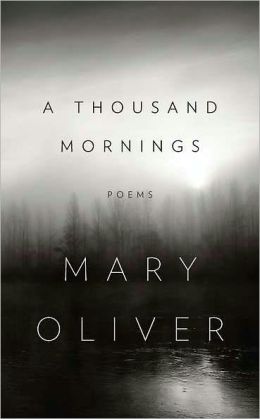
We are introduced to the beauty, the mysteries and the power of the nature, as Mary Oliver  walks us around her backyard, guides us though a  nearby woods, or forces us to look differently at a particular tree. She eloquently guides us through the marshland  and along the coast line of Provincetown, Massechusetts in A Thousand Mornings.


We look  back to the Middle East with Naomi Shihab Nye as she explores that world of her father from her Arab-American standpoint. She is constantly inspired by the land, the language, the people and the experiences that change her there. We can be inspired along with her in 19 Varieties of Gazelle: Poems of the Middle East.
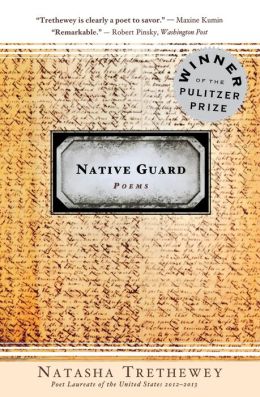

Natasha Trethewey, 2007  winner of the Pulitzer Prize and current United State Poet Laureate, explores the Louisiana past of her grandmother, dwelling there in the  haunting visions she sees through her grandmother's eyes. She offers us and chance to  revisit this place and time in Native Guard.
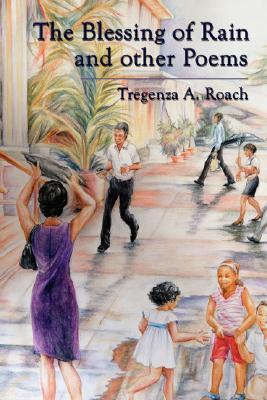


And each time I read  poems from The Blessing of Rain and Other Poems by Tregenza A. Roach, I am transported back to the Caribbean to walk the streets with him of his native St. Kitts  and I remember my times in his current home in St.Thomas, another special writing place for me.  I have a series of ocean/island poems written during several stays.

Where are the places that inspire your writing?


What space  allows you to enter into a writing frame of mind. 
What places hand you ideas, in tact, simply asking you to write them down?

Today's Deeper Writing Possibilities


Where are the places that inspire you to write?
List the places in which you feel you have done extraordinary writing.

What is it about these places that inspire you to write?

You may want to photograph your favorite writing place for further inspiration.

How can you recreate those things  in a different locations such as your home?

Write a narrative, essay or poem about your special writing place.


Monday, April 1, 2013

POETRY: A PLACE TO STAND


We live our lives and in the living we learn and become.

Whether we make note of the learning,  whether we notice or not, as we journey on our path we are gathering extra bits of wisdom and knowledge .  

Whether we record the intuitive and passing observations or not, we come to know stuff—as we talk, as we read, as we interact and experience the world. 


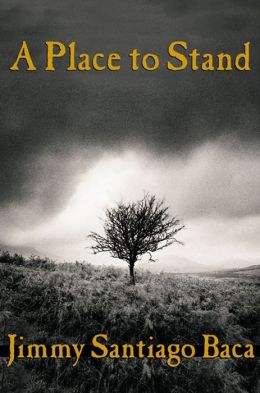
We come to know facts and understandings about the world, the creatures therein, and the phenomena  of our existence.  And ultimately, we come to know our place in  the world, or as Jimmy Santiago Baca experienced it and  named it, a place to stand.

In A Place to Stand, Baca declares:
...poetry helped make me the person I am today awakening creative elements that had long lain dormant in me, opening my mind to ideas, and enabling my intellect to nourish itself on alternative ways. Poetry enhanced my self-respect.  It provided me with a path for exploring possibilities for my life’s enrichments that I follow to this day   
Our current US poet laureate, Natasha Trethewey identifies just such a place to stand in the beginning of the title poem in Native Guard.  This collection is civil war poetry, which we may not often consider lyrical and poetic. 

In telling her mother’s story and her own, however, intertwined with the stories of the Deep South where the first black regiments, the Louisiana Native Guards, were called into service during the civil war, Trethewey achieves poetic and lyrical power.

Excerpts and more about the poem can be found  by clicking here.

What do we know? 
How do we know? 
How did we come to know? 

Many would tell us that poetry is the answer to all three questions. 

Poetry affords us a way to think about our life experiences, to process the events, the
relationships, and unknowns in our lives and in the world.  

Poetry can save us in uncertain times and poetry can light a fire in our lives and in our worlds that we cannot --dare not put out.

Naomi Shihab Nye expresses our need for poetry in speaking about poetry and 9/11 in the
introduction to 19 Varieties of Gazelle:
Writers, believers in words, could not give up words when the going got rough.  I found myself, as millions did, turning to poetry.  Why should it be any surprise that people find solace in the most intimate literary genre?  Poetry slows us down, cherishes small details. A large disaster erases those details.  We need poetry for nourishment and for noticing, for the way language and imagery reach comfortably into experience, holding and connecting it more successfully than any news channel we could name.
I  found  recent wars, with the numbers and statistics and the daily  routineness of the media 

reporting became quickly  both too big and unreal.  It  became real to me only through the small 

details and the personal experiences of my friend's son. The following excerpt  is from a longer

poem I wrote about and for her.


She ate her salad calmly
and we silently remembered
how many boys had died
in the last operation.
Operation with names
like Matador and Sword

She spoke of the operation Dagger
and how her child had to fire
a machine gun
for forty eight hours
to keep his life

We did not ask questions yet.
She ate her salad
and told us how her family
had watched the special
hosted by Oliver North
that followed the LIMA unit

She hesitated between bites
and told how at the end
they showed the standing rifles
capped with the helmets
of the dead boys.
Kneeling on one knee
beside the rifle and helmet
bare head bowed
in honor of his friend
was her son.

So we use the poetry-- we read poetry, we write poetry--to name our experiences, to measure and analyze, to record and remember, to inspire and raise up, to bring to awareness, and to sing out both our deepest sorrows and gladdest celebrations. 

And poetry has the power to make us change us, nourish us and show us new possibilities, new ways to live.
June Jordan attributes agentive powers to poetry:
And so poetry is not a shopping list, a casual disquisition on the colors of the sky, a soporific daydream, or bumper sticker sloganeering.  Poetry is a political action undertaken for the sake of information, the faith, the exorcism, the lyrical invention, that telling the truth makes possible.  Poetry means taking control of the language of your life.  Good poems can interdict a suicide, rescue a love affair, and build a revolution in which speaking and listening to somebody becomes the first and last purpose to every social encounter.  Why should power and language coalesce in poetry?  Because poetry is the medium for telling the truth, and because a poem is antithetical to lies/evasions and superficiality…
(Illuminations: Great Writers on Writing edited by Christina Davis and Christopher Edgar. )
And so we speak and listen to each other in poetry
And so we tell the truth with poems.  
And sometimes that truth surprises us.

Today's Deeper Writing Possiblity

 April is National Poetry Month.
Remember a time when poetry or words made you look at life, or a particular life’s event./situation/reality/relationship differently.
Are there uncertain times in which you turned to poetry—or poetry was given to you?
What are glad times when poetry was where you turned or was given to you?
Reflect on recent changes or possilibities you have been seeing, pondering or recently been introduced to in your life.

What is your truth? What truth are you coming to realize in your life?  What truth do you want to tell about your life?  

Write a poem :
  •  expressing your truth.
  •  about a time poetry saved you.
  •  about your place to stand.
  •  about what you have learned in  this life ( or a particular time in your life), how you know you know and how you came to know.
Write a poem or narrative or essay about change and new possibilities you see for your life. 

Monday, February 11, 2013

LOVE AND POETRY


My love affair with poetry began with this book.


The cover is not connected to the body of the book anymore and the back cover is missing.  When that happened, I don’t know, but it is obvious evidence of  the extent to which this book was loved.

The inscription indicates I was four years old when this book entered my life.

In my earliest memory of poring over the pictures and reading the poetry, I was five or six.

I loved this book and it led to a life-long  love of poetry –reading it and writing it. 

I loved the rhyme, the rhythm, the music, which seemed to be different in each poem, as compared nursery rhymes with their sing-song-same beat.

The texts were short. The idea that something I understood and related to could be said in such short ways, as opposed to the longer stories and information books that I also enjoyed, fascinated me. I had discovered a new type of writing!

Inadvertently, I memorized—learned by heart as we used to say— several of the poems. Not intentionally, but rereading and rereading committed the words forever to my head and heart.
I still know at least half of My Shadow by heart—I used to know all of it.

The other one I remember is The Swing.

One thing I notice now is that both of these favorites were by the same poet, Robert Louis Stevenson.  Even as an early reader my tastes, like now, were consistent.

These two were my favorites, although I liked them all.  The notion that someone else thought and felt like me, wondered about what I wondered about, saw what I saw, and that these thoughts could be written down for other people to read, was a life-changing,  an epiphany.

As I grew older, the poetry I loved changed, but never its presence in my life.

From Lawrence Ferlinghetti and e.e cummings I learned that poetry could break the rules and didn’t have to rhyme. My rhyming poems were never very successful — what a delight to discover I didn’t have to write that kind of poetry.

The Harlem Renaissance poets, Claude McCay and Langston Hughes,and the Black Arts Movement  Poets of the 60’s and 70’s , Amiri Baraka, Nikki Giovanni, and Sonia Sanchez and many others, taught me that poetry could move beyond my own considerations, concerns and feelings to examine the entire human condition, and social justice---or the lack thereof.

Nikki Giovanni remains my favorite poet and Ego-Tripping one of my favorite poems.

The list of  poets I love has expanded to include Billy Collins, Samuel Hazo and my  newest favorite Richard Blanco and several world poets--- Pablo Neruda, Naomi Shihab Nye, Wyslawa Szymborska.

I love poets who can express the everyday ordinary—or as Samuel Hazo would say the Holy Surprise of Right Now

Poetry can express the human condition, name and fight injustice,  voice our joys, comfort us in trials, and help us puzzle through life.

When my parents gave me this book as they gave so many others
as I gave my own kids---
as I gave my students--
they didn’t realize what they were putting into my hands, my head and my heart. 

We cannot predict the sparks we are creating, the passion we are igniting, simply by handing a child a particular book.

I am ever grateful that my parents gave me this one.

Today's Deeper Writing Possibility

What is your earliest memory of a book and reading?
How has that book affected your life?

Write a personal narrative of your reading history or of a book that your loved as a child.
How did this early reading lead to your current reading and writing?