The power of deep study and learning about one--one object or one topic or one issue or concern.
One.
Christien Meindertsma deals in the power of one in Pig 05049. She investigates on the scale of one animal, one pig--pig 05049-- to discover, record and illustrate what happens to this single pig after its death.
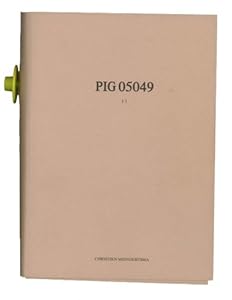
What are all the ways the pig is used? What products are produced from its carcass? Which parts go into making what?
The result of her work makes a fascinating study and unique book. I was hooked the first second I leafed through this book in the bookstore at the Wexner Center at The Ohio State University.
Meindertsma explains how her original interest in this surprising and unlikely topic was sparked:
An older Sicilian, professor at the University of Venice, once told me that in the 'thirties and 'forties of the last century, when he was young, every part of a slaughtered animal was used. When a pig was slaughtered in his village, nothing, and I really mean nothing, from the entire animal was thrown away.I have heard folks express a similar thought about an earlier time--We ate every part of the pig from the rooter to the tooter.
She goes on to tell how the professor said the collected blood became dessert, bone became soup stock, and of course, there was food for all. Her investigation indicates that we now use the pig even more completely.
After its death, pig number 05049 was shipped in parts and particles throughout the world. It is fascinating to see how close some products remain to their original form and function while others diverge dramatically.With spare text, charts, and labels, with page after page of color illustrations, Meindertsma shows us how the skin, bones, meat, internal organs, blood, and fat are used in the expected, as well as the most surprising ways.
Did you know there is pig (gelatine from the skin) in ice cream, beer, and tablets we take for our aches and pains?
I bet you never suspected that pig (glue made from bone) is in your book covers, shoes, wine corks, and x-ray film.
.
And then, there is the pig (blood) in cigarettes. Well, there's a new reason to quit if you are still struggling with that habit.
And that crayon your little one is using-- pig (fat) is there too, and in your toothpaste and body lotion.
And in bread---pig hair.
This study of one animal is interesting, gross, and captures the curiosities of which we were unaware.
What are you interested in exploring on the scale of one?
What one item would you investigate?
Where will your study lead you?
Lynn Gatto reports on how her third grade students entered into a 'study of one' of sorts as they decided to take action regarding their nasty school lunches. The students' critical study of their school lunches led them to find their voices as they critically analyzed a variety of related texts, relationships, power systems, and social constraints.
In her article "Lunch is Gross": Gaining Access to Powerful Literacies, (Language Arts, Vol. No.4, March 2013) she details how their study led to opportunities to engage in authentic literacy practices which ultimately resulted in a positive change in the lunch service situation in their school.
Click here to see the " Lunch is Gross" video produced by her students as part of their extensive study and effort to affect change.
One
The power of deep learning about one concern.
There are several books that utilize a similar singular formula to produce a deep and extensive exploration of one thing.
A Street Through Time: A 12,000 -Year Walk Through History by Dr. Anne Millard takes on a

(To view the 2012 updated version which has a slightly different format--click here)
If water is your topic of choice--what you choose to study on a scale of one--you will find an abundance of books to support your exploration.

Instead of considering all of the water in the world, in A Drop of Water: A Book of Science and Wonder, Walter Wick takes the opposite approach to his 'study of one'. He conducts all of his explorations on just one drop of water--- sharing fascinating information and experiments.

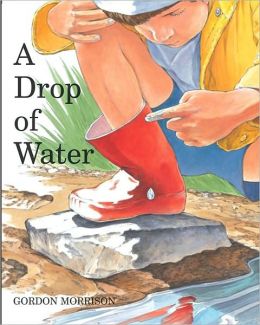
A Drop of Water by Gordon Morrison approaches the study of water from a different perspective. One drop is followed through the entire water cycle.
Characters in books and other texts can also engage in a 'study of one'.
In Speak by Laurie Halse Anderson, it is through a year-long art project--- a study of one object, in her case a tree, rendered in various media, perspectives and styles--that Melinda was able to finally gain the confidence and voice to both face and speak up about the horror that she was dealing with--her own rape by an upper classman that had occurred at a party .
It was through her 'study of one', her tree, that she began her healing process.
Finally, my team and I had success with our own 'study of one'-- a year-long magazine project with fourth graders. Early in the year the students identified their desired topics-- one something in which they were interested or wanted to explore.
We examined a variety of magazines as mentor texts, discussed in detail how they were constructed, and began to think about how we wanted to construct our own.
Last additions to their projects were covers, tables of contents and advertisements.
The final products became magnificent records of their journey, growth and learning in their study of one topic, issue or concern.
Although we worked with fourth graders at the time, this project is relevant and effective with any age-level, including adults.
Click here to read about a similar project in an article by Kathie Marshall, The Magazine Project: Making the Writing Process Real.
One
The power of deeper study, exploration and learning of one topic, object, or concern. What is your one?
Today's Deeper Writing Possibilities
What is one topic, object, or issue in which you are currently interested?Reflect and list your questions or desired areas of exploration around your chosen one.

How can you find out more about your topic and locate responses to your questions and wonderings?
Write a creative nonfiction piece, personal essay or persuasive essay, a narrative or poem.
You may want to begin a extended study and exploration of your chosen area to create a magazine.


