Showing posts with label Nikki Giovanni. Show all posts

Saturday, August 1, 2015

SONGS OF MY GRANDMOTHER


On a hill far away....
 The Old Rugged Cross -Photo by Andy Rogers


The Old  Rugged Cross. I often sing this hymn, Its words and melody are embedded in my soul and  my spiritual DNA. As a small child, I heard this song several times a day by paternal grandma as she worked in the kitchen. There were others she sang, others I remember, but this one remains with me always.

The Old Rugged Cross. It was among a host of songs my sister recorded on the piano to play for my father when he was in the hospital - first very sick, then dying. He would listen --and smile as he listened, even as he slept. As a small child, he also heard this same song, several times a day.

The songs we heard as children carry knowledge  of our family, our community, our collective lives.

Heard again, songs can evoke smells, images, and feelings.

Heard again, sung again, these songs transport us to an earlier time, to childhood fun, to perfect memories.. to romantic moments.  They remind us of funerals, wedding, parties and other celebrations.

As I hum, as I sing, as  I work, I am back in my grandmother's kitchen eating homemade ice cream and drinking a hot toddy for a  sore throat.  I am in the living room watching Queen for a Day and General Hospital or  I am being tucked in bed under her homemade quilts.


In this treasury of memories, Giovanni has invited her friends, including some folks we know for their own writing, to share their meaningful moments, precious memories, fictional accounts,  and gathered wisdom from their grandmothers.


So we peek into the minds and grandmother memories of Gloria Naylor, Gwendolyn Brooks, Maxine Kong Kingston, Nikki Giovanni, and others whom we meet through their grandmother memories.

What do you remember about your grandmothers?
What songs did they sing?
What words of wisdom did they impart to you?
How are they embedded in your cultural and spiritual DNA?

I just finished reading Songs My Grandma Sang by Michael B. Curry, the newly elected  Presiding Bishop of my denomination, the Episcopal Church in the United States.

Bishop Curry revisits the spirituals and traditional hymns he heard as a child, extracting the life lessons and  wisdom found there,  reaping  the cultural history and theology planted in those words,  remembering the energy and spiritual  strength rising in the melodies.

Our grandmother sang life into our lives.

Our grandmothers did not sing only the songs of faith and the church.

Sometimes the songs they sang were the pop songs of their time, the songs played on the radio or heard in the juke joints and honky tonks. Pop and country singer Brenda Lee's first album, Grandma, What Great Songs You Sang, recognized this both in title and content.

What did  you learn about life from your grandmother's songs?
What did her songs teach you about faith?
How did the songs your grandmother sang teach you about history and culture?
How did they explain your family and community?


For additional thoughts on grandmothers, see my previous post.


Today's Deeper Writing Possibilities

Reflect and remember:

What do you remember about your grandmothers?
What songs did they sing?
What did  you learn about life from your grandmother's songs?
What did her songs teach you about faith?
How did the songs your grandmother sang teach you about history and culture?
How did the songs explain your family and community?
How are their songs embedded in your cultural and spiritual DNA?

Write a personal narrative or essay about a song (s) your grandmother sang.

Compose a hymn or song like the ones your are remembering. Write lyrics and create a melody..

Tuesday, August 12, 2014

GRANDMOTHERS


 Nana, Mimi, Big Mama, Mee Maw, Gigi. Grandma—What ever you call your Grandmother, or Great- Grandmother- these women hold special places in our lives. 


In Grand Mothers: Poems, Reminiscences, and Short Stories About The Keepers Of Our Traditions, Nikki Giovanni invited several friends and a group of writers in their nineties to share their thoughts on these special women.  In this collection, we find contributions by Gwendolyn Brooks, Gloria Naylor, Maxine Hong Kingston, and even Giovanni’s own mother.

Both of my Grandmothers were short with long mixed-gray hair which they each wore in a bun. They each wore yesteryear’s typical old-lady shoes—black tie-up oxfords, with thick, short  cuban heels.  Neither one of them ever wore pants—housedresses were their daily uniforms.

Although, to little-girl me, my grandmas seemed old, I am now the age they were then or older.

It sounds like my grandmothers were a lot alike.  That is on paper only.
Despite seemingly similar descriptions,  they couldn't have been more different, not only even in appearance, but in daily activities and personalities, as well.

Alma Reed Jackson
My paternal grandmother watched me daily—just as regularly and faithfully as she watched her afternoon stories (Search for Tomorrow, As the World Turns, and The Guiding Light.)  In the morning she watched Art Linkletter’s Children Say the Darndest Things, Queen for a Day, The Price is Right, and other game shows. She also watched Amos and Andy.

I played at her feet, literally—one of my favorite games was shoe store in which she would be the customer and I the helpful clerk showing her the latest shoes.  If her sister, my aunt Della, was there, I had another willing customer-- the store would be busy that day.

She seemed to be in that chair most of the day, except when she was getting my lunch.

I remember her house—much larger than ours –four stories of fascination—lots to poke into and explore. Surprisingly, I was allowed to play with her many knick-knacks – glass and porcelain items, fancy ladies, bowls, figurines of animals, and other what-nots.

This was where my father had been raised—where he had lived all of his life until the army.  There were traces of him everywhere—like the chunk of petrified wood that sat on the fireplace hearth in the parlor from one of his geology expeditions and the chemistry molecule set (that looked like round building toys, which is how I used them).  

He officially left this home when he married my mother and moved not far from his parents. 

On the second  floor were bedrooms, filled with homemade quilts and lacy sheets; they were perfect places for naps and sleepovers.  And the boarders who sometimes lived in the third floor attic bedroom were always of interest.

The dark, creepy basement was where all the fruits and vegetables that my grandma had canned were stored.   Several rooms were down there—each shadowy enough to set your imagination to working. You hoped you wouldn’t be sent to fetch a jar.
  
I don't remember specific conversations with my grandmother, but I know she was quick to smile and laughed a lot. I know I was happy and safe in her house.

This was my Columbus Grandma, my hometown Grandma. 
She died when I was six.

Hildegarde "Hilda"  Lyons Whiting
My New Jersey Grandma, my maternal grandmother lived in a small two-story doll house over 200 years old.   In 1976 there was a bicentennial plaque placed on her house, stating as much.  She soon took it down because she got tired of people knocking on her door wanting to see the inside.

Her house was just a mile from the Atlantic coast.  Sand from the beach crept into her yard and on into the house. We spent many fun days at the nearby beach with aunts and uncles and lots and lots of cousins.

She rarely sat.   I only remember her sitting to eat her meals, when we had visitors, or to watch an hour or so of TV in the evening--always Lawrence Welk on Sunday. 

She was always washing dishes, or cleaning, or carrying things upstairs, or cooking, or otherwise engaged.

Although I had to help with chores at home, this tiny, stern grandmother felt that children were inherently dirty and did not want us to help with chores until we were much older.  

She was particularly pleased if you were reading.  Don’t bother that child, Betty, she is reading.
Betty is my mother, her daughter.

Nosiness was not tolerated—and getting into grown folks’ business was a definite no-no. (although it one of my favorite  pastimes.)  She was quick to tell you in the midst of your inappropriate question Lay o’ for meddlers, which loosely translates Mind your own business. This conversation is not for children.

She was proud of us (and our parents) beyond measure.  She bragged on us often to her many siblings. We often receive her highest acclamation—Swell!

My New Jersey Grandma died when I was 29, living long enough to see me graduate from high school, graduate from college twice, get married-- and just generally be a grown-up.

Most of us have Grandmother memories and stories.  Most of us have learned lessons and shared conversations and special moments with our grandmothers .


There are many wonderful books that will help us think about, remember, honor and celebrate these special ladies. These are several of my favorites.

The youngest readers will enjoy The Grandma Book by Todd Parr. His colorful illustrations will inspire their own  colorful images and stories.


In the eyes of our grandmothers, we are beautiful and we are important. They teach us to look at ourselves with the same eyes.

Nana teaches this lesson in No Mirrors in My Nana's House: Musical CD and Book


Grandmothers, not only tell us we are beautiful, that we are special, and that we can do and become anything, but they also expose us to the "anything" we might do and become.

In Amazing Grace ,  by Mary Hoffman, Grace's grandmother takes her to the ballet, opening up new possibilities, and helping her gain the confidence to play Peter Pan in the school play.


In Saturdays and Teacakes  by Lester Laminack,  a young boy enjoys spending his Saturdays with his Mammaw, helping her do chores.

At the end of their work time together, he delights in helping her bake delicious teacakes-- their special ending to each special  Saturday.


Most of my friends are grandmothers.

One of the many special things they do for their grandchildren is take them on trips-- adventures in which they travel near and far, learning and experiencing new things, and just having fun enjoying each other's company.

And then there are grandmothers like the one in Abuela (English Edition with Spanish Phrases), who take their grandchildren on amazing  imaginary adventures that also fuel  many new possibilities in life.

Grandmothers are powerful women, teachers, and role models.
There is a movement afoot in which living grandmothers are actively working to change the world-- making it a better place of their grandchildren-- for all children.

In Grandmother Power, we find the profiles of activist grandmothers in fifteen countries on five continents who tell their compelling stories in their own words.

These courageous women are variously bringing solar light to their villages, fighting genital mutilation and sex slavery, sustaining weaving traditions, teaching children to love reading and books, fighting AIDS and more.  Across continents they are working for peace in their corners of the world.

For more information about this global grandmother movement click here.

 Indeed, Grandmothers are powerful.  

Although mine are both long dead, they continue to visit, guard, and guide me regularly in my dreams.
I recently wrote this poem, Grandmother Power about their night visits.  I continue to rely on them.

Yes, our grandmothers are special women.
We remember, honor and celebrate them.

Today's Deeper Writing Possibilities

Remember and  reflect on your grandmother(s).

How has she been involved in your life? How has that relationship changed as your grew older?

List important events, conversations, and lessons related to your grandmother.

Use my post above, the several  book sshared, and/or my poem, Grandmother Power, as mentor texts.

Write a short portrait of your grandmother or a poem to honor her, incorporating items from your list.

This may be the beginning of a longer piece exploring  her life or a portion of her life.


Friday, July 5, 2013

PUNCTUATION INVESTIGATIONS

Punctuation matters.

We considered this fact, as well as examples that demonstrated this, in the previous post, The Power of Punctuation.

Punctuation makes an extreme difference.

Puntuation signals the way we read, interpret, and comprehend a text.  It also supports our fluency in both silent and oral reading--guiding the intonation, inflection, and pace--suggesting where we pause, slow down, or come to a complete stop.

Punctuation matters.. 

But how exactly does punctuation enhance, change, illuminate or eliminate meaning?

And how do writers choose particular punctuation marks to convey their ideas, thoughts and feelings --to add layers of meaning to their writing?

One way to think deeply about punctuation is to investigate the varied manner in which writers use specific marks.  

On numerous occasions, I  have invited  writing group participants to conduct such investigations--always leading to new insights and lively discussions. 

As individuals or in small groups, we consider a number of poems or other pieces of writing in which punctuation (and capitals) are used in distinct ways.

As we consider the writing, the following questions guide our investigation and discussion:

  • What punctuation mark(s) has the author used (or omitted) in a distinct or unusual way ?
  • What seems to be the writer's rule for how to use this mark?
  • How does this decision affect the writing? add meaning? detract from the meaning?
  • How might you have written the piece differently?  used punctuation differently?
  • What else did you notice?

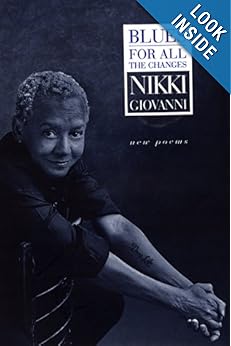
On of my favorite books from which to take selections for this 
investigative activity is Nikki
Giovanni's Blues for All Changes.

In this particular volume of poems, Giovanni has done some unique things with punctuation that foster a close examination of her purposes, her meanings and writing strategies.

For example, in the Inaugural poem, there are no punctuation marks and  no capitals except for the few names of people.

Another poem, Just Jazz, also has no punctuation marks.

 The ellipsis is the punctuation mark of choice in  Not Just Truman's Baby.

And dashes and series of colons rule in And How Could I Live On.

We can consider each poem individually, using the suggested questions listed above.

But considering these poems together, we might also search for an overall pattern about how this writer uses punctuation.


I am always on the lookout for additional poems or other pieces to use with this activity. 

Both All I knew by Mark Belair (The Sun, August 2008, 27) and Decoded  by Jon Sands (Rattle #40, Summer 2013,47) use slashes (or the solidus) in unusual ways that are integral to the meaning of both poems.

And finally, I invite you to consider how punctuation evolves, as a short sentence becomes longer, as ideas are added and meaning is expanded and changes-- and ultimately morphs into a poem --into what Kevin Anderson calls nested meditations.  

Anderson has created a short meditative form in which punctuation matters and makes meaning, as each successive line is added to the verse.

The rules are few and simple (and flexible):


Begin with a single line that forms a complete sentence. 
Each stanza must be a complete sentence.  
Each stanza must include the lines from the previous stanza (punctuation and capitalization may be adjusted as necessary for each stanza to make sense) and each stanza  should be able to must stand alone.


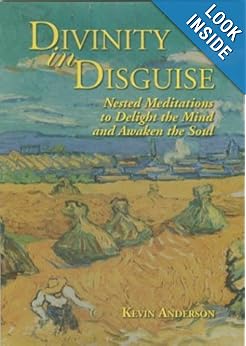
For a more extensive explanation and for samples of nested meditations see Anderson's book, Divinity in Disguise: Nested Meditations to Delight the Mind and Awaken the Soul and his website.

Punctuation matters.
How do writers use punctuation to make meaning?
How do you use punctuation to make meaning?


Today's Deeper Writing Possibilities

 Examine several poems or other pieces of writing to see how the writer has used punctuation.
You may want to use the suggested poems above or gather works by other authors.

Use the questions above to guide your investigation.

Write an essay describing and analyzing how the writer has used particular marks to add meaning to writing.

Try writing a poem or short piece in which you experiment with deliberately using a particular punctuation mark in a unique or experimental way. I am fascinated with the word and function of the ampersand.  Click here to read a draft of a poem in which I play with the ampersand.

You may want to write a nested meditation or try writing an extremely long sentence and play with the punctuation. 


Monday, April 22, 2013

POETRY IN THE TIME OF PAIN

What do you read when you are in pain?

What do you write when your world ---or the world around you-- is falling apart?

When we are in fear collectively, when we are hurting nationally, when we are mourning together, compassionately and monumentally,  what do we read? What do we write?

Many people turn to poetry.

W.S. Merwin,  the seventeenth Poet Laureate, is quoted on Poetry in Times of Tragedy, a page  on the University of Arizona Poetry Center website as follows: 

People turn to poetry in times of crisis because it comes closer than any other art form to addressing what cannot be said. 
This is such a time.

In the past few months, we have seen children massacred,  bombs detonated, and buildings exploded.  We have watched massive manhunts, gunfights and shots flying in residential neighborhoods. 

We have battled nature and its extreme elements and witnessed the fortitude of humanity. 

And we have witnessed unimaginable pain, courageous heroism, and at the end of the day, a determined unity.  

What do we read in times like these?
What do we write?

At our memorials and public gatherings we read poems.

The president of the University of Arizona read Merwin's poem, To the New Yearat the January 12, 2011 memorial event  following the January 8 tragedy in Tucson
.
Nikki Giovanni offered words to comfort us after the Virginia Tech shootings in her April 17, 2007 Convocation Address.

To remember Newtown, poetry was written-- Click here and here to read poems featured by CBS Connecticut (Radio WTIC-1080).

Boston is no different--poetry abounds.  Blogger and Young Adult author, Julie Glover offers excerpts of related poems found online and  also  this observation in her blog post, Boston Bombing and National Poetry Month:

Poems capture all kinds of observations, ideas, and emotions, and in the wake of crisis, poetry can express our deepest wounds and hopes.

Joan Murray offers us a selection of poems to name our fear, poems to define our unpredicted courage, and poems to comfort us in two volumes she has edited, Poems to Live By in Uncertain Times and Poems to Live by in Troubled Times. 


One of my favorite poems,The End and the Beginning by Wislawa Symborska,included in the first volume,  walks us through the aftermath of war (or bombings, explosions and massacres)  

She reminds us of those who ease our healing:


After every war
someone has to clean up.

Things won’t
straighten themselves up, after all...

She reminds us that somebody makes it possible for us to keep going, to move on, to continue living.

...Those who knew
what was going on here 
must make way for
those who know little.
And less than little.
And finally as little as nothing...


And that courage that has amazed us in the past week---Anne Sexton has cornered the definition for which we have been searching. She has pinned down the thoughts we are  not quite able to  formulate, in her poem, Courage, also included in the same volume:


...Later,
if you faced the death of bombs and bullets
you did not do it with a banner,
you did it with only a hat to
cover your heart.
You did not fondle the weakness inside you
though it was there...

What do we offer our children as they deal with horrifying events that loop all day on the television, the images they encounter on the Internet, in the newspapers, and the conversations they inadvertently overhear.


Following the horror of September 11, several writers, including Georgia Heard, felt compelled to provide comfort and hope to our children.  

These writers collected poetry.
They offered poems.

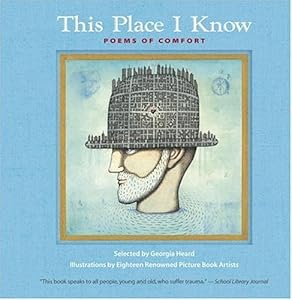
Heard offers classic poems to name the doubts, hold the questions, and point us toward hope in her collection, This Place I Know: Poems of Comfort.

.


Other writers and teachers, in their wisdom and compassion, provided a space  for both students and adults to explore their feelings, their longings-- the room to attempt to name that which can not be named.  

They offered time to write.

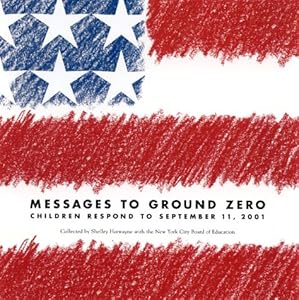
Shelley Harwayne collected writings and drawings and paintings created by children in New York City as they tried to record what they saw, heard, smelled, and felt in response to September 11.  Her amazing anthology, Message to Ground Zero: Children Respond to September 11.2001, provides us a glimpse of the resilience, the hope and the courage that our children possess.  


And it was not just well-known writers who helped us turn to poetry and writing, but also  teachers like you and me, in their classrooms across the country, who offered opportunities to write. 

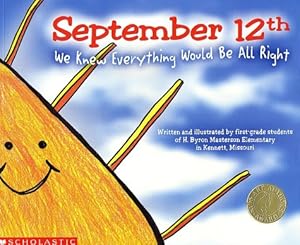
First grade students of H. Byron Masterson Elementary in Kennett, Missouri expressed their confidence in the little things, the daily routines, that calmed them.  In their book, September 12th: We Knew Everything Would be All Right,  they share in writing, how they knew they heal. 


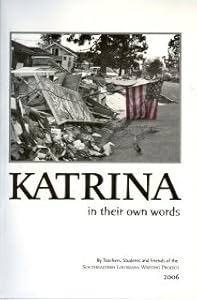
Likewise, after the devastation of Hurricane Katrina, the Southeastern Louisiana Writing Project offered writing time and talking time to both students and teachers in their area.  Not only did this begin the healing process for the writers, but offered the public an anthology, Katrina: In Their Own Words, of written work, songs and, photography, but also a CD and radio broadcast, as well.


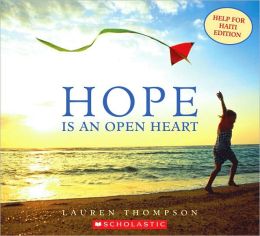
Lauren Thompson points us toward healing and hope in Hope is an Open Heart, in which she offers definitions of hope in action, paired with gorgeous photographs. Among her offerings are the following:


Hope is remembering that you are not alone.Many others feeljust the way you doMany otherscare...
Hope is a heartthat is open to the world around you.Hope is knowing that  things change--and that we can help things to change for the better.


What do you read when you are in pain?

How do you name your pain, write your healing, and create hope?

Many turn to poetry.


Read previous related post, Poetry: A Place to Stand. 


Today's Deeper Writing Possibilities


What  poem, novel, story or essay do you read when you are in pain?  Which piece of literature eases your doubts and comforts you in difficult times?

What is the book you reread when times are tough?

What do you write when you are struggling with fear or anger or disappointment in your own life or the world around you?

Write an essay about the piece of  literature and other written work that sustains, encourages,  comforts, and heals you.

Write a poem to name your  unnameable doubts and fears.

Monday, February 11, 2013

LOVE AND POETRY


My love affair with poetry began with this book.


The cover is not connected to the body of the book anymore and the back cover is missing.  When that happened, I don’t know, but it is obvious evidence of  the extent to which this book was loved.

The inscription indicates I was four years old when this book entered my life.

In my earliest memory of poring over the pictures and reading the poetry, I was five or six.

I loved this book and it led to a life-long  love of poetry –reading it and writing it. 

I loved the rhyme, the rhythm, the music, which seemed to be different in each poem, as compared nursery rhymes with their sing-song-same beat.

The texts were short. The idea that something I understood and related to could be said in such short ways, as opposed to the longer stories and information books that I also enjoyed, fascinated me. I had discovered a new type of writing!

Inadvertently, I memorized—learned by heart as we used to say— several of the poems. Not intentionally, but rereading and rereading committed the words forever to my head and heart.
I still know at least half of My Shadow by heart—I used to know all of it.

The other one I remember is The Swing.

One thing I notice now is that both of these favorites were by the same poet, Robert Louis Stevenson.  Even as an early reader my tastes, like now, were consistent.

These two were my favorites, although I liked them all.  The notion that someone else thought and felt like me, wondered about what I wondered about, saw what I saw, and that these thoughts could be written down for other people to read, was a life-changing,  an epiphany.

As I grew older, the poetry I loved changed, but never its presence in my life.

From Lawrence Ferlinghetti and e.e cummings I learned that poetry could break the rules and didn’t have to rhyme. My rhyming poems were never very successful — what a delight to discover I didn’t have to write that kind of poetry.

The Harlem Renaissance poets, Claude McCay and Langston Hughes,and the Black Arts Movement  Poets of the 60’s and 70’s , Amiri Baraka, Nikki Giovanni, and Sonia Sanchez and many others, taught me that poetry could move beyond my own considerations, concerns and feelings to examine the entire human condition, and social justice---or the lack thereof.

Nikki Giovanni remains my favorite poet and Ego-Tripping one of my favorite poems.

The list of  poets I love has expanded to include Billy Collins, Samuel Hazo and my  newest favorite Richard Blanco and several world poets--- Pablo Neruda, Naomi Shihab Nye, Wyslawa Szymborska.

I love poets who can express the everyday ordinary—or as Samuel Hazo would say the Holy Surprise of Right Now

Poetry can express the human condition, name and fight injustice,  voice our joys, comfort us in trials, and help us puzzle through life.

When my parents gave me this book as they gave so many others
as I gave my own kids---
as I gave my students--
they didn’t realize what they were putting into my hands, my head and my heart. 

We cannot predict the sparks we are creating, the passion we are igniting, simply by handing a child a particular book.

I am ever grateful that my parents gave me this one.

Today's Deeper Writing Possibility

What is your earliest memory of a book and reading?
How has that book affected your life?

Write a personal narrative of your reading history or of a book that your loved as a child.
How did this early reading lead to your current reading and writing?

Friday, January 18, 2013

Writing in the Context of Our Lives


Where do we find ideas?

I can still hear some of my students moaning I don’t know what to write.
Many teachers have told me they don’t have anything to write.
You may also feel that you do not have any writing ideas.

The truth is we do not write in a vacuum--writing comes from somewhere. And in reality, I have never met a person, young or old, who did not have something to write about, a story to tell, wisdom to share, and ideas to explore.

So where do we find writing?

 In my experience with both students and teachers, I have found all writing ideas arise from four sources: content, context, containers and container linings.  These elements are not linear; they do not occur in a step-one-step-two sequence. Our ideas may arise from one, all, or any combination of these four foundational starting places and lead us to deeper writing.
In the next several posts, I will explore each of these starting places.  Today we will consider context.

Context as a Source of Writing Ideas

Something makes us want to write--- we may not know what we want to write and what meaning we want to construct, but we know in certain situations and circumstances that we have to write. It may be a conversation in which we have participated or overheard, a book we have read, or the juxtaposition of several texts, or a piece of music, or art or a relationship, place, event or experience.  From all of these and other contexts, we may be surprised by the desire or intense impulse to write.

Death as a Context

In the context of deaths of close family members, three of my favorite poets were moved to write.  All of them chose to  write poetry. 

Nikki Giovanni shared at an OCTELA presentation several years ago how she wrote each day  while sitting at the bedside of her dying mother. The result was Acolytes.


Jane Yolen wrote The Radiation Sonnets while her husband was undergoing treatment for cancer and then a year after his death she wrote Things to Say to a Dead Man.


Mary Oliver’s partner of 40 years died; she wrote Thirst.      


The meanings they each made were diverse, the emotions varied, and the purposes of the  writing individual, yet universal.  But the writing all arose out of the context of death.

Darkness as Context

Twice I have been in power outages that immediately plunged my companions and me into total darkness- no stars, no neon, no far off lights from a neighboring home, distant city or nearby island. Once in St. Thomas, Virgin Islands while on vacation and once again at Kenyon College in Gambier, Ohio on a CAWP retreat this happened. 

Out of this context, I wrote several pieces, all making various meanings, and focusing on several points, but arising from the same source.   I immediately wrote a had-to-be-there poem to share with the group at Kenyon that next morning, then a narrative written in front of my students as a model, and finally much later, a quick write lesson to include in my book.

The context, the unrelenting velvet black surrounding me, compelled me to write, to make sense of our collective fear of the dark. What is the history of this fear? What did our ancient  mothers and fathers think and do when plunged into this same darkness? 

Each piece I wrote made a distinct meaning and was presented in a different container, but each arose out of the context of darkness.


Today’s Deeper Writing Possibilities

 In what contexts have you felt compelled to write?
What have you recently read, seen, experienced, attended, or observed that made you feel you just had to write something?  How did that feeling manifest itself? 
When else have you had that same feeling?

You may want to list as many of these times as you can and then focus on one to explore in writing.