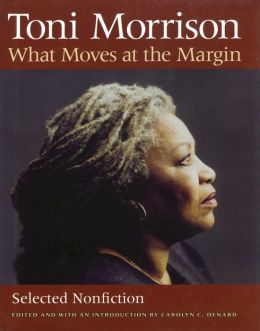
I can not read without a pen in my hand.


I have to underline, circle, and bracket the text. I have to star and code---- and write in the margins.
An entirely new text begins to emerge as I progress through a book.
If you borrow a book that belongs to me, I read the book along beside you.
If I read a book that belongs to you, I am interested in the conversation in which you engaged as you read.
Do you write in the margins of your books?
Do you annotate your thinking and leave traces of your journey through a book?
Do you write in the margins of your books?
Do you annotate your thinking and leave traces of your journey through a book?
How do you document your thinking and edges of awareness as you read? What are your emphatic thoughts? Your questions? Your connections to other texts, to the world, to your own life?
As long as there have been texts-- scrolls, codices, handwritten manuscripts, and bound-books-- readers have jotted their thinking in the margins, added notes to themselves or to future readers, and revised their thinking on the page.
And according to H. J. Jackson in Marginalia: Readers Writing in Books we use pretty much the same methods of annotating used by our ancestor readers:

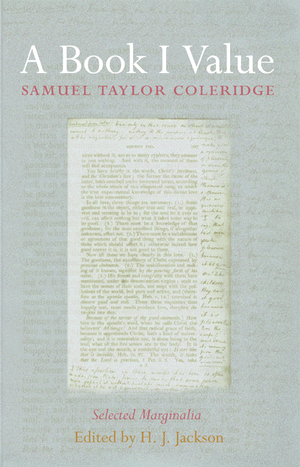
Jackson presents a unique exploration of the history of marginalia, along with its cultural, psychological and emotional affects on both the writer and the reader. This book highlights our responsiveness to books and to other readers and writers. Click here to access a PDF version of Marginalia.
In researching this topic I discovered that many readers' notes have actually been considered of value and have been published. Jackson tells us that Samuel Taylor Coleridge occupies a pivotal position in the history of marginalia in English, for his is the name associated with the publication and popularization of the genre.
I teach one of the adult Bible Studies in my church. The Bible that I use for teaching, has so
 many notes, and references, and other annotations that I can easily and immediately find needed scripture passages or verses, answers to questions, or related information. The notes in this current Bible were painstakingly copied over a period of a month or two from my former Bible when I initially replaced and retired it in 1999. Now, of course, the notes and markings have multiplied exponentially.
As long as there have been texts-- scrolls, codices, handwritten manuscripts, and bound-books-- readers have jotted their thinking in the margins, added notes to themselves or to future readers, and revised their thinking on the page.
And according to H. J. Jackson in Marginalia: Readers Writing in Books we use pretty much the same methods of annotating used by our ancestor readers:
If you ask annotators today what systems they use for marking their books and where they learned them, they generally tell you that their methods are private and idiosyncratic. As to having learned them, they have no more recollection of having been taught the arts of annotation than of having been taught how to fasten on a wristwatch. If you listen to their accounts of what they do, or if you are allowed to examine their books, however, you find (with very, very few exceptions) that they reproduce the common practices of readers since the Middle Ages. These are traditional practices culturally transmitted by the usual tacit and mysterious means—example, prohibition, word of mouth. They are taken for granted as part of the common reading experience, and it looks as though they will continue so.
Jackson presents a unique exploration of the history of marginalia, along with its cultural, psychological and emotional affects on both the writer and the reader. This book highlights our responsiveness to books and to other readers and writers. Click here to access a PDF version of Marginalia.
In researching this topic I discovered that many readers' notes have actually been considered of value and have been published. Jackson tells us that Samuel Taylor Coleridge occupies a pivotal position in the history of marginalia in English, for his is the name associated with the publication and popularization of the genre.
I teach one of the adult Bible Studies in my church. The Bible that I use for teaching, has so

There are several folks that have jokingly stated that when I die they want this Bible.
On the other hand, there are folks who absolutely will NOT write in their Bibles.
There are folks who will absolutely not mark (or deface) any book.
Jonathan Lui is one of those people. In his blog post a couple of years ago he writes about his New Year's resolution to get over this reluctance.
It is standard practice even in elementary school now to teach students how to record their thinking on the page --or to use sticky notes to accomplish the same purpose for books that are not owned by the reader. Greta Steber of Colorado State University, in her blog post, Writing in the Margin suggests that teaching students how to produce and share marginalia should be a course staple :
So do you write in your books, do you document your thinking and the changes in your thinking, note the elements that surprise you as your read, argue passionately with the author, or underline the important information that you never want to forget?
Several years ago I wrote a poem that included the ability or habit of marking the text/marking your journey as a given right of readers. Click here to read the poem, A Reader's Declaration published in Language Arts (Vol. 88, No. 3, Jan. 2011) Scroll to the last page of the PDF for the poem.
I can almost hear someone asking...But what about Kindles and iPads and computers?
What is the future of marginalia? How do we digitally annotate our texts?
Fortunately, there are many digital tools we can use that allow our obsessive marking of texts habits to migrate to our technological companions.
On most tablets and ereaders, we can underline or highlight in a variety of colors to allow for easy coding. ( I have to make certain I have put my pen down for this kind of reading.) We can easily add notes and comments, as well as bookmark the texts.
In addition, excerpts of texts and our notes can be copied and shared to our favorite social media sites, promoting immediate sharing of the texts we are currently reading, as well as our responses.
As we create and read texts on our computers, we can track changes and add comments if we choose Review in Microsoft Word and utilize the options provided. This is how my editor commented and I responded on each draft of my book.
On the computer and on tablets there are also tools that allow us to extend our conversation with the author, ourselves, and other readers into the margins of our texts. Some of those include Adobe Reader, Google Docs on Google Drive, Diigo, and the Kindle Application.
One interesting iteration of this marking of texts is the capacity to annotate conversations.
Recently I took a course with Troy Hicks and a small group of teachers from the Columbus Area Writing Project. We met every Sunday evening on Google Hangout. Just as lively, interesting and essential to my learning as the actual conversation, was the back channel (or comments being typed on the side of the screen) as the conversation was taking place.
The ability to "talk" when it was not my turn, allowed me to keep track of my responses and for all of us to see how each was responding to what was being said. Because this is lost as soon as the live conversation is over, we quickly learned to copy and paste the notes before we closed the window at the end of our conversation.
Is this the next generation of annotation and marginalia?
How will we preserve for the next generation our precious (or casual responses) to text?
Dirk Johnson notes the importance of marginalia in our lives and asks this question in his blog post published online in the New York Times (Books- February 20, 2011). Will we be led from electronic texts back to the books as he suggests?
And finally on Brain Pickings, one of my favorite blogs, Maria Popova summarizes the marginalia situation:

On the other hand, there are folks who absolutely will NOT write in their Bibles.
There are folks who will absolutely not mark (or deface) any book.
Jonathan Lui is one of those people. In his blog post a couple of years ago he writes about his New Year's resolution to get over this reluctance.
I don’t write in books. I don’t even like writing my name in them, even though my mom taught me I should...
I (now) like the idea of leaving a trail behind me when I make my way through a book. It’s like dropping a few bread crumbs or pebbles so that I can follow them on my next journey, or leaving a message for the next person to read the book. I like the idea that my library could be more than just a collection of books on shelves, but that they could actually tell a story about who I am, in my own words.
So that brings me to my New Year’s Resolution for 2011. This year, I’m going to try to get over my reluctance to mark in my books...
It is standard practice even in elementary school now to teach students how to record their thinking on the page --or to use sticky notes to accomplish the same purpose for books that are not owned by the reader. Greta Steber of Colorado State University, in her blog post, Writing in the Margin suggests that teaching students how to produce and share marginalia should be a course staple :
Annotating is a metacognitive skill that most people have used at some point in their lives, either as a student or professionally. According to Nick Otten (2011) "What the reader gets from annotating is a deeper initial reading and an understanding of the text that lasts. You can deliberately engage the author in conversation and questions, maybe stopping to argue, pay a compliment, or clarify an important issue—much like having a teacher or storyteller with you in the room."
So do you write in your books, do you document your thinking and the changes in your thinking, note the elements that surprise you as your read, argue passionately with the author, or underline the important information that you never want to forget?
Several years ago I wrote a poem that included the ability or habit of marking the text/marking your journey as a given right of readers. Click here to read the poem, A Reader's Declaration published in Language Arts (Vol. 88, No. 3, Jan. 2011) Scroll to the last page of the PDF for the poem.
I can almost hear someone asking...But what about Kindles and iPads and computers?
What is the future of marginalia? How do we digitally annotate our texts?
Fortunately, there are many digital tools we can use that allow our obsessive marking of texts habits to migrate to our technological companions.
On most tablets and ereaders, we can underline or highlight in a variety of colors to allow for easy coding. ( I have to make certain I have put my pen down for this kind of reading.) We can easily add notes and comments, as well as bookmark the texts.
In addition, excerpts of texts and our notes can be copied and shared to our favorite social media sites, promoting immediate sharing of the texts we are currently reading, as well as our responses.
As we create and read texts on our computers, we can track changes and add comments if we choose Review in Microsoft Word and utilize the options provided. This is how my editor commented and I responded on each draft of my book.
On the computer and on tablets there are also tools that allow us to extend our conversation with the author, ourselves, and other readers into the margins of our texts. Some of those include Adobe Reader, Google Docs on Google Drive, Diigo, and the Kindle Application.
One interesting iteration of this marking of texts is the capacity to annotate conversations.
Recently I took a course with Troy Hicks and a small group of teachers from the Columbus Area Writing Project. We met every Sunday evening on Google Hangout. Just as lively, interesting and essential to my learning as the actual conversation, was the back channel (or comments being typed on the side of the screen) as the conversation was taking place.
The ability to "talk" when it was not my turn, allowed me to keep track of my responses and for all of us to see how each was responding to what was being said. Because this is lost as soon as the live conversation is over, we quickly learned to copy and paste the notes before we closed the window at the end of our conversation.
Is this the next generation of annotation and marginalia?
How will we preserve for the next generation our precious (or casual responses) to text?
Dirk Johnson notes the importance of marginalia in our lives and asks this question in his blog post published online in the New York Times (Books- February 20, 2011). Will we be led from electronic texts back to the books as he suggests?
David Spadafora, president of the Newberry, said marginalia enriched a book, as readers infer other meanings, and lends it historical context. “The digital revolution is a good thing for the physical object,” he said. As more people see historical artifacts in electronic form, “the more they’re going to want to encounter the real object.”
And finally on Brain Pickings, one of my favorite blogs, Maria Popova summarizes the marginalia situation:
How marginalia will live on may be up for debate, but whether they will is not — they’re simply too essential a canvas for digesting and disputing concepts, too key a voice box for our inner monologue about the world of words and ideas.What do you write in your margins?
Today's Deeper Writing Possibilities

Pull out a favorite book from your shelf and examine the margin notes. What kinds of markings have you made in your book? What system have you used to record your thinking and document your responses to the author and the ideas?
What do you learn about the author, the text, and yourself from examining your notes?
Are there further notes you would make about changes in your thinking?
Do you annotate differently depending on what you are reading? Are your notes different in your novel or book of poetry from those in your professional texts?
Write about what you have learned examining your marginalia.
Just for fun, take a second look at your notes in the margin.
Can you arrange portions of your notes and/or sections you have underlined to form a poem?